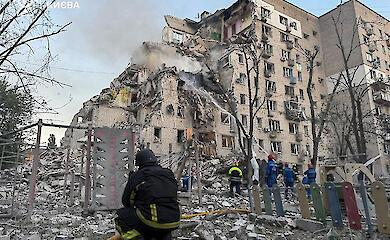
Сan AI be trusted? UCSD scientists on transparency and risks of technology


AI has long since ceased to be a technology of the future - it's everywhere: writing letters, picking up films, helping to drive cars.
But not all AI can be considered safe and trustworthy, according to David Danks, professor of philosophy and data scientist, and Lily Weng, head of the Trusted Machine Learning Lab at the Halıcıoğlu Institute at the University of California, San Diego.
"AI is any system that replaces or augments human mental labour. Just as machines have replaced physical labour," Danks explains. - "But I look at AI from a human perspective - as something that helps us think and act in new ways."
Testing - but not trusting
As the professor points out, he is surprised by how willing people are to experiment with AI, especially in the home - whether it's voice assistants or text generators. But it often doesn't get any further than play:
"We're willing to try, but we don't trust. And perhaps rightly so - many AI systems are not fully trustworthy right now."
Lily Weng emphasises: we need to develop not just "smart" AI, but transparent and error-resistant algorithms:
"Responsible AI is one that explains its decisions, is resistant to attacks and is not susceptible to manipulation. We need to understand how it works - otherwise we won't be able to control it."
Invisible AI: from auto to data collection
Danks points out that AI is increasingly operating "behind the scenes". For example, in modern cars:
"When I open ChatGPT, I realise I'm using AI. But in a car, I don't always know how deep AI is embedded - from engine management to possibly passing my data to insurers. And those are already risks."
In his opinion, it is the invisibility of algorithms that requires companies to be fully transparent: "People need to know when and why AI is being used."
Medicine and trust - the challenge of the future
Researchers are particularly hopeful about AI in healthcare. But the risks here, too, are much higher than with chatbots or recommendation systems.
"AI-assisted diagnosis is a powerful tool. But without trust and explainability of decisions, such technologies can do harm," says Weng. - "Our challenge is to make AI not only accurate, but also transparent."
What AI will never replace
According to Danks, there are areas where algorithms are powerless - and will remain so in the near future:
"Any job where emotional interaction is important - whether it's psychology, education, or human care - doesn't lend itself to automation. AI can mimic empathy but is incapable of genuine connection."
He adds that AI does poorly at tasks where it's unclear what counts as success:
"Algorithms are good when the goal is clear. But life is more complex. We often go by feel, we learn from mistakes. That's something AI hasn't learnt yet."
AI is not a storm, it's a construction site
Danks concludes by emphasising: it's a mistake to fear AI as an impending disaster. It is built by humans, and they are the ones responsible for it:
"AI is not a hurricane, it is the future we are building. It's important to remember: technology is not imposed on us from the outside - it reflects our values, choices and mistakes. If we want AI to be honest and useful - we have to make it so."
Maria Grynevych, project manager, journalist, co-author of Guidebook Sacred Mountains of the Dnieper Region, Lecture Course: Cult Topography of the Middle Dnieper Region.
Related news

Scientists have discovered how cockroaches recognise ‘their own’


AI has almost entirely excluded female characters from stories about animals

Scientists have explored the glacier on the summit of Mount Ararat for the first time


Popular news

Ukrainian security services have been recognised as among the best intelligence services in Europe – L'Express

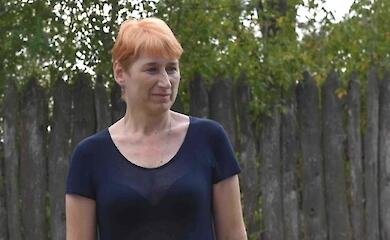
Irina Levchenko, the abducted Ukrainian journalist, has been transferred to the Donetsk remand centre: what is known


Scientists have put forward an explanation as to why there were no tiny dinosaurs
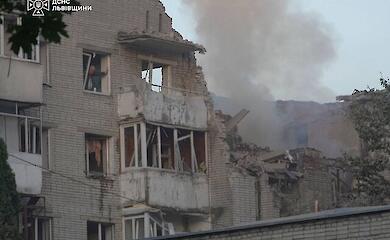
Russia has attacked Lviv with drones and missiles: dozens of residential buildings have been damaged and there are casualties
News about war

The UN has reported a sharp rise in the number of Ukrainian civilians killed as a result of the war

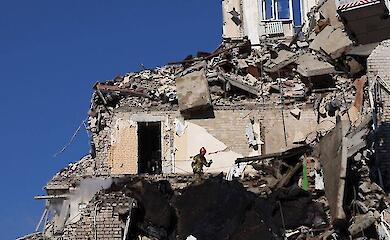
3 July has been declared a day of mourning in Kyiv. The number of dead and injured is rising