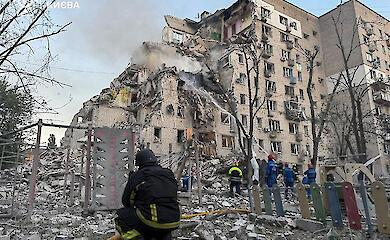
Ancient Palmyra under threat: new report of extensive destruction after the fall of the Assad regime


The ancient city of Palmyra, one of Syria's most famous landmarks, has suffered widespread destruction in recent events.
The historic buildings, inscribed on the UNESCO World Heritage List since 1980, were severely damaged during the war. Following Syria's liberation from the Assad regime on 8 December, an international team of experts conducted a field survey to assess the state of the archaeological sites and surrounding residential neighbourhoods, comparing them to their pre-2011 state of conservation. The report was compiled by the Palmyrene Voices initiative of the NGO Heritage for Peace in collaboration with the Barcelona-based Milà i Fontanals Institution of the Spanish National Research Council (CSIC).
More information: Report: palmyrenevoices.org/the-realit ... of-the-assad-regime/
Purpose of the research
According to archaeologist Isber Sabrineh, one of the project coordinators and IMF-CSIC researcher, the main objective of the report is to draw the attention of both the local population and the world community to the massive threats to Palmyra's cultural heritage. More than 15 observers participated in the writing of the document: residents of the city, archaeologists and refugees recently returned to their homeland.
The extent of the destruction
According to the report, about 80 per cent of the city's built environment is either destroyed or on the verge of collapse. Civilian infrastructure is barely functioning: problems with electricity, water, communications and health care are widespread. Of Palmyra's roughly 100,000 pre-war residents, only about 10,000 have returned today. The city is literally strewn with explosive objects and weapons debris.
Separately, researchers are highlighting the Efqa Oasis, which covers about 400 hectares. The oasis was almost completely burnt down by regime forces in 2020. Some of the surviving plantations suffer from lack of water, and garden owners are trying to save what remains of palm and olive trees.
Cultural heritage under threat
Twelve key historical sites came to the attention of the report's authors. These include the Tetrapylon, a Roman theatre (both 2nd century), Diocletian's camp (3rd century), the medieval citadel of Kalaat-ibn-Maan (13th century), the "Valley of the Tombs" (1st century) and the Palmyra Archaeological Museum.
- Tetrapion: the four corner groups of columns were almost levelled to the ground after the explosions, there are no traces of systematic numbering of the stones.
- Temple of Baalshamin: the temple is about 2200 years old, but now it is just a pile of rubble.
- Roman Theatre: the façade was destroyed by airstrikes and there are traces of illegal excavations.
- Archaeological Museum: many statues and funerary steles were destroyed, the building itself was damaged by airstrikes. The exhibits are guarded only by a group of volunteers and the Antiquities Department, with virtually no funding.
Prospects for restoration
The authors emphasise that securing the return of residents and rebuilding the city's infrastructure is a key step for the continued protection and restoration of cultural monuments. Today, Palmyra is teetering on the brink of desertion: housing and life support systems are in poor condition, and without economic support, it is difficult to attract the archaeologists and other staff needed to conserve the monuments.
The final part of the document emphasises the need for joint efforts of the international community and local structures. An urgent strategy for the rehabilitation and reconstruction of Palmyra is required, covering equally the ancient part of the city, its oasis and residential neighbourhoods. Such an approach will enable people to regain the opportunity to live, work and, at the same time, protect an invaluable historical heritage that is valuable to world culture.
An independent researcher, interested in archaeology and sacred geography. He researches them and writes about them.
Related news
The oldest piece of amber, dating back 385 million years, has been discovered in China


Bones have shed light on the unusual lives of Egyptian princesses
Who lived in Europe’s last pagan state? The answer surprised the scientists

Scientists have uncovered the secret behind Roman concrete, which has remained intact for 2,000 years
Popular news


Scientists have discovered that power among the Scythians was passed down through the family line


Navrotsky has announced a ban on the red-and-black flag in Poland: what will change

News about war
The UN has reported a sharp rise in the number of Ukrainian civilians killed as a result of the war

3 July has been declared a day of mourning in Kyiv. The number of dead and injured is rising