
AI first proved for the first time the existence of multiple authors in the Bible


Researchers have for the first time used artificial intelligence (AI) to unlock the mysteries of authorship and writing styles of one of the most famous ancient books, the Bible.
An international team of scientists led by mathematician Shira Feigenbaum-Golovin from Duke University used statistical modelling and linguistic analysis to understand by whom the first nine books of the Old Testament (the so-called Enneateuch) were written.
The results of the study are published in the journal PLOS One.
The AI was able to distinguish between three different writing traditions that span the first nine books of the Bible. The team applied the model to disputed portions of the text and was able to identify the most likely authors. An important advantage of this technology is that the AI explains on the basis of which words and expressions it arrived at its conclusions.
The work began in 2010, when Feigenbaum-Golovin collaborated with renowned archaeologist Israel Finkelstein, studying inscriptions on ancient clay fragments. Then they noticed that the style of lettering on fragments from the 6th century B.C. could help date Old Testament texts.
In the new study, the scientists teamed up with archaeologists, physicists, mathematicians and biblical scholars from different universities around the world. They used AI to analyse the first five books of the Bible (Torah), historical books from Joshua to Kings and priestly texts.
The study confirmed the scientists' already existing assumptions: the texts of the book of Deuteronomy and the historical books are much closer to each other than to the priestly texts. Surprisingly, AI accurately identified stylistic differences even for the most common words, such as "not," "which," or "king."
To test the accuracy of their model, the researchers chose 50 chapters from the first nine books of the Bible whose authorship has already been determined by scholars. AI confirmed this categorisation and proposed an exact formula by which the text belongs to one of the three writing styles.
In the second part of the study, the team applied the model to chapters whose authorship was still controversial among scholars. AI compared these chapters to the three identified writing traditions and suggested the most likely authors.
In the process, the scientists encountered serious difficulties: many texts of the Bible were repeatedly edited, and it was extremely difficult to find unchanged fragments. In addition, it was often necessary to analyse very short passages - just a few verses, which made it difficult to use standard machine learning methods. Therefore, the team developed a unique approach to work with a small amount of data.
The scientists were surprised by the fact that two fragments of one narrative about the Ark of the Covenant from the Books of Samuel turned out to be completely different: the text from the 1st Book of Samuel did not fit any of the styles, while the text from the 2nd Book turned out to be close to the style of historical books.
Feigenbaum-Golovin emphasised that their method is not only suitable for studying the Bible, but also for checking the authorship of other historical documents, such as the letters of Abraham Lincoln. The team is already planning to use the technique to study the Qumran manuscripts.
According to the researchers, their work opens a new way to study ancient texts and demonstrates the amazing effectiveness of science and humanities working together.
An independent researcher, interested in archaeology and sacred geography. He researches them and writes about them.
Related news



A hidden source of resistance to the latest antibiotics has been discovered in Australia


Traces of water heated to 300 degrees have been found near the “Lost City”

An antidote to one of the most potent marine venoms has been found in frogs
Popular news
Traces of water heated to 300 degrees have been found near the “Lost City”
An antidote to one of the most potent marine venoms has been found in frogs


News about war
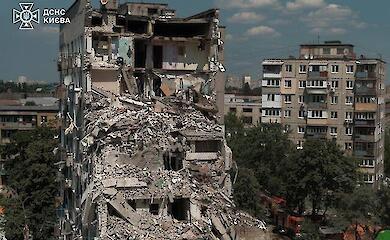
The UN has reported a sharp rise in the number of Ukrainian civilians killed as a result of the war

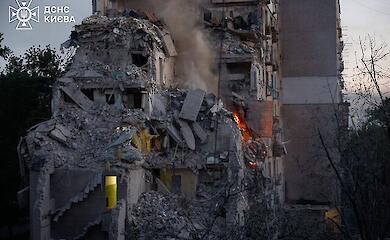
3 July has been declared a day of mourning in Kyiv. The number of dead and injured is rising