

500 million years old organics found in fossils of ancient sea creatures


Scientists have found chitin in fossils - it's changing the way we think about the longevity of carbon
An international team led by UT San Antonio scientists has announced the first confirmed detection of chitin in trilobite fossils older than 500 million years. This is not just a paleontological sensation: the result hints that organic carbon may be "preserved" in the Earth's crust much more reliably and for longer than thought.
Chitin is one of the most widespread biopolymers on the planet (it is the basis of crustacean shells and insect outer coverings). It has long been assumed that such molecules degrade relatively quickly after the death of an organism and rarely survive geological time. However, a new study adds to the argument to the contrary: some biopolymers are able to persist in rocks for extremely long periods of time.
The paper centres on the trilobite Olenellus from the Pyramid Shale Member of the Carrara Formation (Emigrant Pass area, California). The authors give the age of the layer as about 514.5-506.5 million years old (Early Cambrian).
To confirm the presence of chitin, the researchers used several independent approaches: fluorescence staining with calcofluor white, infrared spectroscopy (FTIR) and electrospray ionisation mass spectrometry (ESI-MS). As a result, they obtained signals indicating D-glucosamine, the monomer from which chitin is built.
Why might this be important broader than "just another molecule in the fossil record"? The authors link the finding to the long-term carbon cycle: if chitin (and its associated organic carbon) can persist under typical geological conditions for hundreds of millions of years, it means that rocks like limestone formed from biological remains could be part of a natural "long-term" carbon burial. And this already directly relates to how the Earth "manages" CO₂ on large time scales.
At the same time, the study emphasises: the work is based on a limited number of samples, which means that ahead - to test on other finds and preservation conditions. But the very fact of confirmed chitin in trilobites makes the topic of "long-lived organics" in rocks much more real and measurable
An independent researcher, interested in archaeology and sacred geography. He researches them and writes about them.
Related news
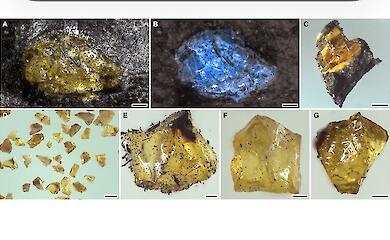
The oldest piece of amber, dating back 385 million years, has been discovered in China

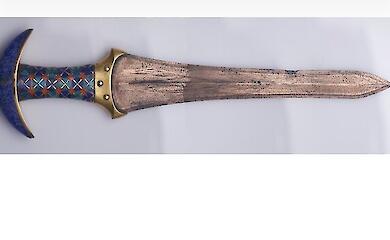
Bones have shed light on the unusual lives of Egyptian princesses
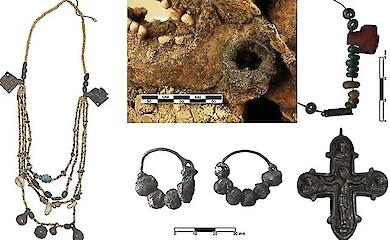
Who lived in Europe’s last pagan state? The answer surprised the scientists

Scientists have uncovered the secret behind Roman concrete, which has remained intact for 2,000 years
Popular news



Scientists have discovered that power among the Scythians was passed down through the family line

Navrotsky has announced a ban on the red-and-black flag in Poland: what will change

News about war

The UN has reported a sharp rise in the number of Ukrainian civilians killed as a result of the war



3 July has been declared a day of mourning in Kyiv. The number of dead and injured is rising