
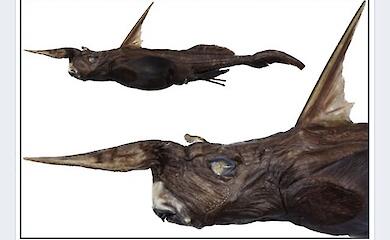

Why do animals become smaller in warm oceans?


In warmer oceans, marine animals may be getting smaller — and this is not just a worrying modern-day trend. A new palaeontological study has shown that a similar response has recurred throughout Earth’s history over hundreds of millions of years.
Scientists from the University of Erlangen–Nuremberg, the University of Warsaw and the University of Lille analysed nearly 9,000 changes in body size among marine animals, drawing on fossil, historical and modern data. This enabled them to compare how organisms have responded over a period of approximately 450 million years.
The study has been published in the *Proceedings of the National Academy of Sciences*.
Details
The phenomenon studied by the authors is known as the ‘Lilliput effect’. This is how palaeontologists describe a situation where, following or during an ecological crisis, animals on average become smaller. This can occur in two ways: individual species decrease in size, or smaller species begin to dominate within communities.
The new study shows that this reduction in size is not a random occurrence, but rather a fairly common response by marine ectotherms to stressful ecological crises. According to the study’s lead author, Paulina Netcher, this response has been observed across a wide range of groups: from ‘dwarfing’ within individual species to the dominance of smaller species in entire communities.
This effect was particularly pronounced during periods of rapid global warming. The authors compared crises associated with significant warming with other environmental crises. It turned out that during periods of severe warming, changes in size within species were more pronounced and varied. On average, these effects were approximately twice as strong as during crises without significant warming.
Put simply, when the ocean gets warmer, organisms have to adapt. For many marine animals, a reduction in size may be linked to changes in metabolism, oxygen requirements, food availability and growth conditions in warmer water. However, the study does not attribute everything to a single mechanism: the authors refer to a long-term trend and note that the reasons for the reduction in size may vary across different groups.
The link with temperature proved particularly significant. The greater the rise in temperature during past crises, the more pronounced the reduction in body size. One of the study’s authors, Wolfgang Kießling, described Earth’s history as a warning sign for the future of the oceans.
What this means in simple terms
Marine animals do not ‘shrink’ instantly, as in a cartoon. We are talking about long-term changes in populations and communities. For example, in warm and stressful conditions, smaller individuals may be able to survive and reproduce. Or large species may decline, whilst smaller ones become more common.
Therefore, the phrase ‘animals are getting smaller’ does not refer to a single specific action, but to a whole set of processes: changes in growth, survival, community composition and evolutionary trajectories.
The authors believe that recent observations of a reduction in the size of certain fish and marine invertebrates should not be regarded as a short-term anomaly. This may be part of a longer-standing pattern: during periods of warming, marine life has often shifted towards smaller sizes.
Why this matters
An animal’s size is not merely a superficial characteristic. It determines what the organism eats, what might eat it, how many offspring it produces, how quickly it grows, and what role it plays in the food chain.
If there are more small organisms in the ocean, this could alter the entire ecosystem. Predators may lack their usual prey, food webs may be restructured, and fisheries may yield fewer large fish and seafood.
This matters to people too. Fish and marine invertebrates are an important part of the diet and economy in many regions of the world. If global warming exacerbates the trend towards smaller marine organisms, the consequences could affect not only nature but also food systems.
However, the study does not provide a simple prediction for every species. It does not mean that all fish or all molluscs will necessarily become smaller to the same extent. Rather, it highlights a broad historical pattern: during periods of significant warming, size reduction in marine ectothermic animals occurred more frequently and was more pronounced.
Background
The idea that organisms may shrink during environmental crises has been known for a long time. Palaeontologists have observed that, following mass extinctions or abrupt environmental changes, smaller forms often appear in the fossil record. This has been termed the ‘Lilliput effect’ – by analogy with the tiny inhabitants of the land of Lilliput in Jonathan Swift’s novel.
The new study is significant in that it brings together very different types of data: fossil finds, historical observations and modern research into body size. This broad scope allows us to compare ancient crises with what is happening in the oceans today.
The example of belemnites — ancient cephalopods from the Mesozoic era — is particularly telling. Finds from Portugal show that during a period of extreme warming around 183 million years ago, they were roughly half the size of their counterparts before and after this event. This example clearly illustrates how a severe climatic upheaval could have affected the size of marine animals.
Source
Study: Paulina S. Nätscher, Kenneth De Baets, Wolfgang Kiessling, “Unique fingerprint of marine ectotherm body size change during hyperthermal crises”, Proceedings of the National Academy of Sciences, 2026.
Mykola Potyka has a wide range of knowledge and skills in several fields. Mykola writes interestingly about things that interest him.
Related news
Archaeologists have discovered who actually built Colombia’s ancient canals


Neanderthal bone tools have been discovered in Romania for the first time

Almost 500 blue artefacts have linked Iron Age Iran with ancient Egypt

A Chinese inscription has debunked the legend surrounding the Boston Tea Party relic
Popular news

How to cook sweetcorn properly so that it’s juicy and sweet: the best method revealed

Archaeologists have discovered who actually built Colombia’s ancient canals
Scientists have put forward an explanation as to why there were no tiny dinosaurs


Scientists have discovered how snakes lived during the age of the dinosaurs
News about war

An expert explains how Russia is changing its tactics for strikes on Kyiv


The UN has reported a sharp rise in the number of Ukrainian civilians killed as a result of the war



3 July has been declared a day of mourning in Kyiv. The number of dead and injured is rising