The face-lift is back - and even the stars aren't hiding it


The world of aesthetic medicine has taken an unexpected turn: the classic facelift, recently considered obsolete, is back at the height of its popularity.
Despite the long glory of injections, lasers and non-surgical methods, more and more patients are returning to surgical procedures, particularly facelifts. This is reported by Harper's Bazaar India.
Experts note the growing interest in this procedure among celebrities and not only. So, 69-year-old Kris Jenner recently surprised the public with her visibly younger appearance. After a flurry of discussions on social networks, her representative confirmed to People that Jenner has indeed resorted to plastic surgery with surgeon Steven Levine.
According to the British Association of Aesthetic Plastic Surgeons (BAAPS), the number of facelift surgeries has been falling over the past ten years, with a 53% drop reported in 2015. But today the situation has changed, with an 8% increase recorded in 2025.
Plastic surgeon Georgios Orfaniotis explains:
"The techniques used in the 1990s often led to complications. Modern techniques target deeper layers - the muscles - for a more harmonious and long-lasting result."
Experts cite the limits to the effectiveness of non-invasive procedures as one of the reasons for the return of interest in surgery. BAAPS president Nora Nugent said:
"I am seeing an increase in the number of patients who are not getting enough of the effects of injectables. They are looking for natural and long-lasting rejuvenation." In addition, many are tired of regular injections of fillers and Botox.
The growing popularity of slimming products like Ozempic and Wegovy is also affecting demand for facelifts. Nugent emphasises:
"Slimming can lead to volume loss and loose skin on the face and neck. With the advent of GLP-1 products, we are seeing more of these patients."
Video calls have also played a role. During the pandemic and in the age of hybrid work, people started seeing themselves on screen more often, which sharpened the focus on appearance. Dr Maryam Zamani comments:
"So-called 'Zoom dysmorphia' is a reality. Constantly watching yourself on camera makes age-related changes more visible even to young people."
Orfaniotis also agrees:
"Smartphones have intensified the fixation on the smallest imperfections. We've become overly attentive to our faces - especially people in their 40s and older."
According to Nugent, the majority of patients are still people in their 50s and 60s. However, more and more younger patients - 40 and older - are interested in minimally invasive options such as the SMAS mini facelift, which tightens the lower face and neck and looks as natural as possible.
According to Orfaniotis, social media has played a positive role:
"People have become more aware, they see the results, read reviews, know the cost and understand how the recovery will be."
However, he warns: it is important to choose a surgeon carefully.
"Fixing a botched lift is difficult. I get photos every week of deplorable results - and I can't always help."
So the return of facelifts is not just a trend, but a response to the desire for natural and long-lasting results, which are increasingly rare to achieve without a scalpel.
Maria Grynevych, project manager, journalist, co-author of Guidebook Sacred Mountains of the Dnieper Region, Lecture Course: Cult Topography of the Middle Dnieper Region.
Related news

Dermatologists have named a universal product for skin moisturising

Experts have named ways to slow down the appearance of grey hair
Antiperspirant or deodorant: what is the difference and what to choose?
Popular news

How to cook sweetcorn properly so that it’s juicy and sweet: the best method revealed


Archaeologists have discovered who actually built Colombia’s ancient canals


Scientists have put forward an explanation as to why there were no tiny dinosaurs


An expert explains how Russia is changing its tactics for strikes on Kyiv

News about war

An expert explains how Russia is changing its tactics for strikes on Kyiv
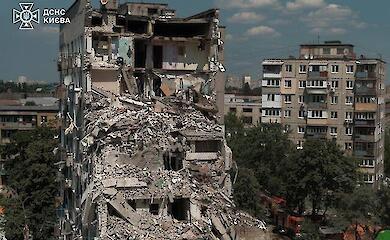
The UN has reported a sharp rise in the number of Ukrainian civilians killed as a result of the war