The EU-Moldova summit is taking place today. Chisinau steps up pressure on Brussels over EU accession

Amid heightened tensions over Ukraine's bid to join the EU, Moldova insists on clear guarantees for its own European future.
On the eve of a key EU summit in Chisinau, Moldovan authorities urged Brussels not to slow down the enlargement process despite political obstacles, Politico reported.
European Commission President Ursula von der Leyen and European Council President Antonio Costa arrived in the Moldovan capital on Friday. Their visit is a symbolic support for a country seeking to join the European Union. However, the situation is complicated by the fact that Moldova's and Ukraine's applications are being considered in tandem, while Hungary, led by pro-Kremlin Prime Minister Viktor Orban, continues to block Kiev's European integration process.
In an interview with POLITICO, Moldova's deputy prime minister and head of European integration Cristina Gerasimov warned that any delays undermine trust in the EU.
"We risk giving arguments to Russian propaganda: as if the EU is not interested in enlargement, as if it does not value countries like Moldova, and that there is simply no 'window of opportunity'," she said.
According to Gerasimov, Ukraine's accession to the EU is a security issue for the whole continent. However, she stressed that the process should remain "merit-based" and move forward as criteria are met.
Orban, known for criticising support for Kiev and close ties with Moscow, claims that 95 percent of Hungarian citizens voted against Ukraine's EU membership. However, the opposition and independent observers say the referendum was held with an extremely low turnout and was subject to manipulation.
Meanwhile, European Commission enlargement spokesman Guillaume Mercier said Brussels does not support the idea of "unbundling" the bids of Moldova and Ukraine, despite calls from some politicians.
"It is up to the member states to decide. For our part, we support both countries in their reforms," he emphasised.
Danish Foreign Minister Marie Bjerre, whose country took over the EU Council presidency in July, said:
"It is too early to speculate about alternative scenarios. Our aim is to start full-fledged negotiations with both countries."
European Commissioner for Enlargement Marta Kosch said in an interview with POLITICO that Moscow is actively interfering in Moldova's upcoming parliamentary elections, using "unprecedented resources to destabilise the region".
Last October, despite winning the referendum on European integration (50.4% in favour), there were massive cases of disinformation and attempts to buy votes. President Maia Sandu was able to be re-elected, but the future of the pro-European course depends on the outcome of the 28 September parliamentary elections.
The EU has already allocated billions of euros to support the Moldovan economy, fight hybrid threats and lower energy prices.
"Friday's summit is a political signal: Europe stands by Moldova and supports its path to membership," Kosch said.
MEP Siegfried Muresan said Moldova faces fewer technical difficulties than Ukraine:
"It is a small country, it is easier to integrate. But it is important that the EU sends a clear signal: as soon as the criteria are fulfilled, the country should be accepted".
We shall remind you that the first ever EU-Moldova summit is taking place in Chisinau on 4 July 2025, during which European Commission President Ursula von der Leyen and European Council President António Costa meet with Moldovan President Maia Sandu and the country's top leadership. The main goal of the meeting is to reaffirm Moldova's political, economic and defence support and to strengthen its membership prospects in the European Union.
The summit comes at a turning point for the country's democratic development and its European trajectory, participants said.
"We reaffirm our commitment to Moldova's sovereignty, security and sustainability against the backdrop of Russia's war against Ukraine and hybrid attacks on Moldova," the draft joint declaration said.
The EU will condemn the Kremlin's interference in the country's internal affairs, including spreading disinformation and bribing voters. Ahead of parliamentary elections in Moldova scheduled for 28 September, the EU is concerned about attempts to destabilise the situation.
Since applying for EU membership in March 2022 and obtaining candidate status in June 2022, Moldova has consistently implemented reforms. Accession negotiations were officially opened in June 2024.
The EU also announced an unprecedented support package of €1.9bn for 2025-2027. The funds are aimed at supporting reforms, modernising the economy, fighting corruption, increasing energy independence and digital transformation.
The summit will discuss:
measures to strengthen cyber security and combat hybrid threats;
support for Moldova's armed forces through the European Peace Fund (197 million euros);
the country's inclusion in EU programmes such as Erasmus+, Creative Europe and Digital Europe;
participation in the Roaming at Home initiative and the launch of WiFi4Moldova.
The parties emphasise the importance of the EU-Moldova Association Agreement and the Deep and Comprehensive Free Trade Area in force since 2016.

Journalist and editor of informational and analytical programs.
Related news

Refugee policy as a test for European integration: how Ukraine and other candidate countries pass it


The President of Lithuania may act as a mediator between Ukraine and Poland

"I work at a supermarket checkout because I don't want to be woken up by patients calling at night." How Ukrainians work in Poland now


Russia has little time left, Europe even less. What the Western media say about the possible end of the war
Popular news
Ukrainian security services have been recognised as among the best intelligence services in Europe – L'Express

Irina Levchenko, the abducted Ukrainian journalist, has been transferred to the Donetsk remand centre: what is known

Evidence has been found in Australia of an unusual ritual that has been practised for thousands of generations

News about war
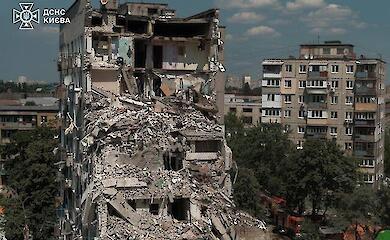
The UN has reported a sharp rise in the number of Ukrainian civilians killed as a result of the war
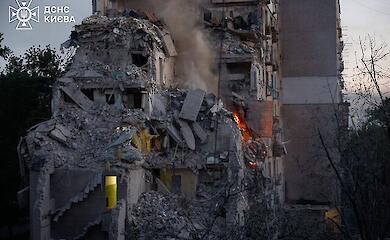
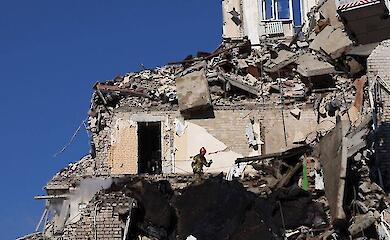
3 July has been declared a day of mourning in Kyiv. The number of dead and injured is rising