
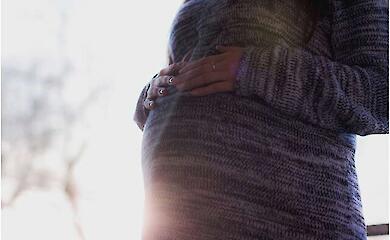

Smelling fatty foods during pregnancy may increase the risk of obesity in children


The smell of frying bacon and other fatty foods during pregnancy can affect the metabolism of the unborn baby - at least in mice.
This is reported by researchers at the Institute for Metabolism Research of the Max Planck Society.
In the experiment, pregnant mice were given a healthy, low-fat diet, but with the addition of flavours of fatty food - for example, the smell of bacon. The females themselves did not gain weight and did not show metabolic abnormalities. However, their offspring responded more strongly to the high-fat diet later in life:
they gained body weight more rapidly,
developed more severe obesity,
more often showed signs of insulin resistance, a condition associated with the risk of type 2 diabetes.
The results are published in the journal Nature Metabolism.
How offspring's brains change
The scientists also found that these mice had altered brains:
the dopamine system, which is responsible for motivation and feelings of reward, worked differently;
AgRP neurons, which control hunger and general metabolism, responded differently to fatty foods.
"The offspring's brains looked like those of obese mice - only because their mothers ate wholesome food that smelled like fatty food," explains co-author Laura Casanueva Reymon.
The fetuses received the "fatty food" signal while still in utero and in the early postnatal period - through their mother's milk. What's more, artificial activation of the neural circuits associated with the perception of the smell of fatty food at an early age was enough to trigger the development of obesity in adulthood.
What does this mean for humans?
Children of obese women are known to be more likely to be overweight themselves. The new study adds an unexpected touch: even in lean and metabolically healthy mothers, the sensory cues of "fatty foods" alone during development may increase the risk of obesity in offspring - at least in mice.
That said, the authors emphasise an important detail:
in the experiment, the females had to eat the flavoured food; the odour from the air alone was not enough to trigger the effect in the offspring.
"Our results change the way we think about how maternal nutrition affects offspring health," says study leader Sophie Stekulorum. - Until now, the focus has been on how much fat she eats and how much weight she gains. But perhaps the tastes and odours that the foetus and newborn encounter - regardless of whether the mother herself is healthy - also matter."
The role of food flavourings
To create the "greasy food smell", the scientists used a variety of flavourings, many of which are similar to those used as additives in the food industry.
It turned out that one of these components by itself could already cause a similar effect in offspring.
According to the researchers, this is a reason to take a closer look at how the use of such substances during pregnancy and breastfeeding may affect the formation of metabolism in children in the long term.
Maria Grynevych, project manager, journalist, co-author of Guidebook Sacred Mountains of the Dnieper Region, Lecture Course: Cult Topography of the Middle Dnieper Region.
Related news

More than 50,000 seals killed by bird flu - scientists sound the alarm



Popular news

Orban announces "results" of Hungarian mission on Druzhba oil pipeline


Will maternity leave be shortened in Ukraine? Changes for workers with children


Zelensky said that Russia was preparing a new offensive and pointed out the direction of it


Kellogg named the ceasefire condition today and compared Putin to Nicholas II

News about war
Orban announces "results" of Hungarian mission on Druzhba oil pipeline
Kellogg named the ceasefire condition today and compared Putin to Nicholas II
Zelensky said that Russia was preparing a new offensive and pointed out the direction of it

Russia is destroying Ukraine twice as fast as at the start of the war - international report