


Seals 'see' with their whiskers - study shows


Scientists have found out that seals find prey underwater with the help of whiskers, capturing the slightest movements of water. It turned out that the movement of the whiskers enhances this ability. This is important because such a mechanism can be used in robots.
Seals are able to "see" prey even in total darkness.
Details
A study has shown that seals don't just sense water with their whiskers, but actively move them to better pick up tracks from moving objects.
When the whiskers point forward, they become more sensitive, but require more energy. That's why seals use balance: they keep their whiskers in a certain position and move them rhythmically.
Scientists created an artificial model of a moustache with "muscles" to test this mechanism.
The experiment confirmed that the movement of the whiskers helps them to better pick up weak water fluctuations and more accurately follow the "trail" of prey.
Why it matters
The findings could be used to create new sensors and robots.
The scientists note:
- robots will be able to navigate without cameras
- the technology can work underwater and in the dark
- such systems could be quieter and safer than sonar
- this will reduce the impact on marine animals
In the future, such sensors could also be used on land - for example, for navigation in difficult environments.
Background
Seals hunt in low visibility conditions, so have evolved sensitive whiskers that can pick up the slightest movement in the water.
The whiskers were previously known to play an important role, but the significance of their movement remained not fully understood.
Source
The study is based on experiments with an artificial model of whiskers, mimicking the movements of seal vibrissae, and analysing their sensitivity to water movements. The material is published in npj Flexible Electronics (2026).
Maria Grynevych, project manager, journalist, co-author of Guidebook Sacred Mountains of the Dnieper Region, Lecture Course: Cult Topography of the Middle Dnieper Region.
Related news
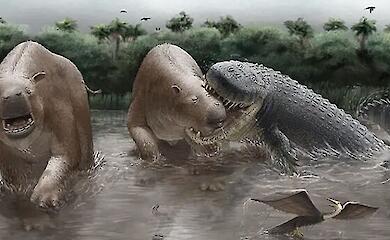
Giant caimans may have been South America’s top predators 13 million years ago


People laugh, but cats are suffering: scientists have analysed popular pet videos

Scientists have unravelled the mystery of a fossil left in the Arctic almost 80 years ago
How dinosaurs took to the skies: a computer model has provided an unexpected answer
Popular news

How to cook sweetcorn properly so that it’s juicy and sweet: the best method revealed


Archaeologists have discovered who actually built Colombia’s ancient canals


Scientists have put forward an explanation as to why there were no tiny dinosaurs

Scientists have discovered how snakes lived during the age of the dinosaurs
News about war

An expert explains how Russia is changing its tactics for strikes on Kyiv


The UN has reported a sharp rise in the number of Ukrainian civilians killed as a result of the war



3 July has been declared a day of mourning in Kyiv. The number of dead and injured is rising