


Scientists have identified a very dangerous consequence of parental arguments on children
- Home
- Life
- Healthy lifestyle
- Scientists have identified a very dangerous consequence of parental arguments on children


Scientists have discovered how conflict between parents affects the heart as an adult.
Scenes of physical aggression between a mother and father leave not only deep psychological traces in a child, but also increase the risk of cardiovascular disease in adulthood. This conclusion was reached by scientists from China, the United States and Australia, publishing their findings in the journal JAMA Network Open.
Previous studies have repeatedly shown a link between adverse childhood experiences (ACEs) and subsequent health problems - for example, with an increased risk of cancer, arthritis, migraines and mental disorders. However, the impact of specifically physically abusive parental conflict on the cardiovascular system has long remained less studied.
To fill this gap, an international team of researchers turned to data from the China Health and Retirement Longitudinal Study (CHARLS), a project on the health of people over 45 in China. The sample included more than 10,000 men and women with an average age of 58 years. Observations were conducted for nine years, from 2011 to 2020. The subjects underwent regular medical examinations, participated in surveys and interviews, and answered questions about whether they had experienced physical confrontations between their parents as children.
Participants' answers ("never," "not very often," "sometimes," or "often") were matched with diagnoses of cardiovascular disease (heart attack, coronary heart disease, angina pectoris, and others). A total of 2415 cases of cardiovascular disease were identified during the study period. After adjusting for distorting factors, it turned out that those who regularly witnessed domestic violence between their mother and father had a 36% increased risk of heart disease compared to those who did not have such experiences.
The scientists also found that people with such childhood trauma were more likely to suffer from depressive states in adulthood, which only partially (by about 11%) explained the association with cardiovascular abnormalities. Thus, psychiatric effects do not fully unravel the mechanism of increased risk - there are likely other factors that influence heart health.
Maria Grynevych, project manager, journalist, co-author of Guidebook Sacred Mountains of the Dnieper Region, Lecture Course: Cult Topography of the Middle Dnieper Region.
Related news
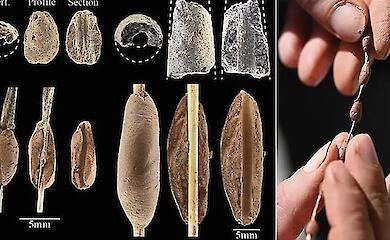
Archaeologists have found children's fingerprints in 15,000-year-old clay


Scientists have discovered how a father's health affects his child before conception


100,000 net outings in the autumn: what happened after the borders opened up for 18-22 year old men


Popular news
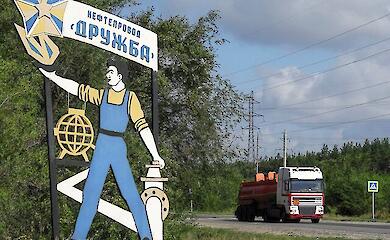
Orban announces "results" of Hungarian mission on Druzhba oil pipeline


Will maternity leave be shortened in Ukraine? Changes for workers with children


Zelensky said that Russia was preparing a new offensive and pointed out the direction of it

Kellogg named the ceasefire condition today and compared Putin to Nicholas II

News about war
Orban announces "results" of Hungarian mission on Druzhba oil pipeline
Kellogg named the ceasefire condition today and compared Putin to Nicholas II
Zelensky said that Russia was preparing a new offensive and pointed out the direction of it
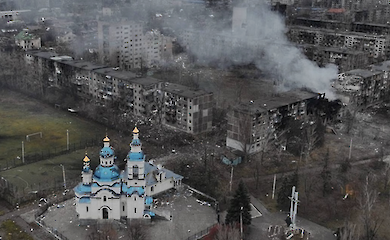
Russia is destroying Ukraine twice as fast as at the start of the war - international report