
Scientists have found out what the inhabitants of ancient Mesopotamia actually ate


Scientists have reconstructed the diet of ancient Mesopotamians using tooth enamel. It turned out that ordinary people ate differently than described in ancient texts. Their daily diet was simpler and hardly included fish, despite the proximity of water.
The study was conducted on the territory of the ancient city of Abu-Tbeir in the south of modern Iraq. Scientists studied the tooth enamel of people who lived about 4,500 years ago. It is enamel that best preserves chemical traces of food and allows to restore the diet even where other organic materials have long been destroyed.
The results show that the diet was based on cereals, primarily barley and wheat. Pork was apparently used as the main source of animal protein. There is almost no evidence of fish consumption, which seems unexpected, given the proximity of the settlement to water bodies.
This conclusion is especially interesting against the background of written sources of that epoch. Cuneiform texts often mention fish and beer, but such records tend to reflect the lives of the elite rather than the everyday lives of ordinary people. The new data show that the actual diet was much more modest and monotonous.
Details
Additionally, the study allowed to clarify some aspects of the life of the ancient population. In particular, scientists concluded that babies were breast-fed until about six months of age, after which animal milk was gradually introduced into the diet. There were also no noticeable differences in diet between men and women.
Why it matters
Overall, the work shows that modern scientific methods provide new insights into the lives of ancient societies. Analysing tooth enamel gives the opportunity to see not only the official picture reflected in the sources, but also the daily habits of people who were rarely recorded in written history.
Source
The study was conducted by scientists from the University of Sapienza (Italy). The results were published in the journal Proceedings of the National Academy of Sciences.
An independent researcher, interested in archaeology and sacred geography. He researches them and writes about them.
Related news

A discovery in Spain has brought us closer to unravelling the mystery of human origins

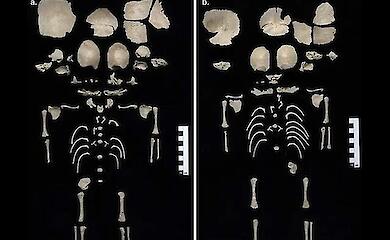
Two babies were found carefully buried in an abandoned Roman latrine
Historians have discovered an unexpected origin for the term ‘burnout’

Traces of a vast ancient civilisation have been found beneath the Amazon rainforest
Popular news

Ukrainian security services have been recognised as among the best intelligence services in Europe – L'Express




Irina Levchenko, the abducted Ukrainian journalist, has been transferred to the Donetsk remand centre: what is known

Evidence has been found in Australia of an unusual ritual that has been practised for thousands of generations
News about war

The UN has reported a sharp rise in the number of Ukrainian civilians killed as a result of the war


3 July has been declared a day of mourning in Kyiv. The number of dead and injured is rising