


Scientists have discovered a single source of lava for all of Earth's hotspots


A team of geologists from the University of British Columbia has proposed revising our ideas about the origin of volcanic lavas erupting in Earth's hotspots such as Hawaii, Iceland and Samoa.
In the course of the study, scientists came to a surprising conclusion: all lavas probably originate from a single reservoir deep within the planet's mantle.
The Earth's mantle is a massive layer of solid rock that makes up about 84 per cent of the planet's volume. This layer sits between the iron core and the Earth's crust. Despite the high temperatures, the mantle remains solid because of the enormous pressure. Magma released from the mantle and bursting to the surface through the crust becomes lava, creating volcanic islands and mountain ranges in so-called hotspots - areas where magma rises from the depths of the mantle.
It was previously thought that the chemical diversity of lavas erupting at these hotspots was due to the heterogeneity of magma sources in the deep mantle. It was thought that different components of magma could have formed in different parts of the mantle at different times and had different chemical compositions.
However, a study published in Nature Geoscience shows that the diversity in the chemical composition of the lavas is due to processes occurring during the magma's ascent to the surface, rather than differences in the sources in the mantle. This means that there is a single, relatively homogeneous reservoir of magma at depth in the mantle.
Geologists analysed trace elements and isotopes in lava flows from hotspots, as well as kimberlites and basalts from major magmatic provinces. The results showed that the parent magmas from which these lavas originate have similar elemental and isotopic compositions. This indicates a single magmatic source deep in the mantle, contradicting previous theories of significant heterogeneity.
The new discovery suggests a simpler model for the evolution of Earth's mantle. Scientists believe that a single reservoir in the mantle was enriched with incompatible elements back in the Archean eon, about 2.5 to 4 billion years ago. This reservoir has remained relatively unchanged since then, which explains its uniformity.
If these findings are confirmed, our ideas about the Earth's internal structure will change. The mantle will appear more homogeneous than previously thought. This study will also help to better understand the processes that took place in the early history of our planet and shed light on the evolution of the Earth.
Maria Grynevych, project manager, journalist, co-author of Guidebook Sacred Mountains of the Dnieper Region, Lecture Course: Cult Topography of the Middle Dnieper Region.
Related news
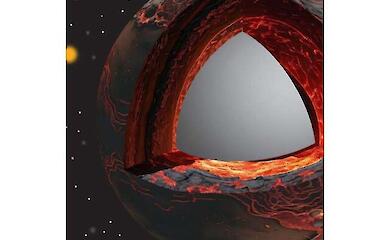
Anomalies at the core-mantle boundary helped explain why Earth became habitable


Scientists: research into network marketing glosses over its real risks



Popular news
Orban announces "results" of Hungarian mission on Druzhba oil pipeline

Will maternity leave be shortened in Ukraine? Changes for workers with children


Zelensky said that Russia was preparing a new offensive and pointed out the direction of it


Kellogg named the ceasefire condition today and compared Putin to Nicholas II

News about war
Orban announces "results" of Hungarian mission on Druzhba oil pipeline
Kellogg named the ceasefire condition today and compared Putin to Nicholas II
Zelensky said that Russia was preparing a new offensive and pointed out the direction of it
Russia is destroying Ukraine twice as fast as at the start of the war - international report