

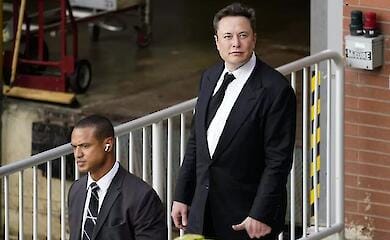
Russian Federation vetoes UN Security Council resolution on non-proliferation of weapons in space


The Russian Federation's vote against the draft document may indicate that Moscow is hiding something.
Russia has vetoed a draft UN Security Council resolution against the proliferation of weapons in outer space. This was reported by Ukrinform on 25 April.
Thirteen members of the Security Council out of 15 (the USA, the UK, France, Algeria, Guyana, Ecuador, Mozambique, Sierra Leone, Malta, the Republic of Korea, Slovenia, Switzerland and Japan) voted in favour of the resolution introduced by Japan and the USA.
Only the Russian Federation spoke against it, China abstained. According to the draft resolution, "all states, especially those with significant space capabilities, should actively contribute to the goal of the peaceful uses of outer space and the prevention of an arms race in outer space."
As US Permanent Representative to the UN Linda Thomas-Greenfield noted at the Security Council meeting, Russia's vote against the draft document could indicate that Moscow is hiding something.
If you stick to the rules, why don't you support a resolution that confirms them? What could you be hiding? - she rhetorically asked the representatives of the Russian delegation
According to Thomas-Greenfield, "China has demonstrated that it would rather defend Russia as its junior partner than the global non-proliferation regime."
The criminal Moscow regime prevented the UN Security Council from adopting a draft resolution that called on all states to prevent an arms race, particularly nuclear in space. This happened in part because war criminals are still allowed to occupy the seat of a permanent member of the UN Security Council, the USSR, despite the daily crimes committed by Moscow," Ukraine's Permanent Representative to the UN, Serhiy Kislitsa, wrote in social network X on social media
The votes in the Security Council were distributed as follows: in favour -13, against - 1 (Russia), abstained - 1 (China).
Russia's new weapons will be based in space in the future and this will be a violation of the 1967 Outer Space Treaty. Earlier, the White House said that it was monitoring the development of Russian anti-satellite weapons. It is under development and does not yet carry a threat.
John Kirby did not directly confirm or deny reports that Russia's new weapon is nuclear, but he said that it is "space-based" and that it violates the 1967 Outer Space Treaty, which prohibits the placement of nuclear weapons or other weapons of mass destruction in space.
Also earlier, the head of the European Council, Charles Michel, said that excluding the Russian Federation now is impossible because it would lead to a deadlock in the very concept of UN security.
I think there is a flaw in international law if a permanent member of the UN Security Council, in this case Russia, blatantly violates international law. In my opinion, a mechanism for termination of membership should have been established: I am not talking about the complete exclusion of Russia, but at least the termination of Russia's membership in the Security Council," he said.
Back at the beginning of the full-scale invasion, Russia vetoed a UN resolution demanding an end to the war against Ukraine.
The Joe Biden administration sees no way to change UN rules and will therefore continue efforts to isolate Russia, White House Speaker Karine Jean-Pierre said.
If there was a way to remove Russia from the UN Security Council, we would start doing it immediately," she said.
The US will also continue its course to hold Russia accountable, including through sanctions and the leverage of international organisations.
The accident of the Russian interplanetary automatic station Luna-25 on the surface of the Moon and other events in the field of space exploration show that the Russian Federation is gradually becoming a secondary space country. The Russian Federation's place is being taken by more successful players.
Eugenia Ruban writes about political and economic news. She looks at large-scale phenomena in Ukrainian politics and economics from the perspective of how they will affect ordinary Ukrainians.
Related news
Brussels reacted sharply to the Belgian Prime Minister's call to negotiate with Putin

Drone with artificial intelligence? What fell on Maidan Nezalezhnosti - statement of the Ministry of Defence and experts' opinion


Kellogg named the ceasefire condition today and compared Putin to Nicholas II
Britain says under what circumstances Putin will start a war in Europe

Popular news

Orban announces "results" of Hungarian mission on Druzhba oil pipeline


Will maternity leave be shortened in Ukraine? Changes for workers with children


Zelensky said that Russia was preparing a new offensive and pointed out the direction of it
Kellogg named the ceasefire condition today and compared Putin to Nicholas II
News about war
Orban announces "results" of Hungarian mission on Druzhba oil pipeline
Kellogg named the ceasefire condition today and compared Putin to Nicholas II
Zelensky said that Russia was preparing a new offensive and pointed out the direction of it

Russia is destroying Ukraine twice as fast as at the start of the war - international report