


Psychologists have explained why some people are chronically late
- Home
- Life
- Curiosities
- Psychologists have explained why some people are chronically late


How ADHD changes your sense of time
If a person is constantly late, it is not always a sign of disrespect. Psychologists are increasingly talking about so-called "time blindness " - a condition in which it is difficult for a person to feel the passage of time and correctly estimate how long a particular task will take, Medicalxpress writes with reference to AP.
British woman Alice Lovatt has also experienced this phenomenon. Since childhood, she was regularly late for school, let her friends down and lived in constant stress over time. It wasn't until she was 22, after being diagnosed with ADHD (attention deficit hyperactivity disorder), that she learned her problem had a neuropsychological explanation.
"It's like I don't have an internal clockmaker in my head," Lovatt admits.
What is "temporary blindness"
The term is associated with impaired executive functions of the brain, for which the frontal lobes are responsible. A person with temporary blindness
has a poor judgement of how long a task will take;
has no sense of how quickly it goes by;
regularly underestimates the time it takes to pack and travel.
The link between this phenomenon and ADHD was described back in the 1990s by the American neuropsychologist Russell Barkley, who called the effect "temporary myopia". Today, this term is actively discussed on social networks - and often argue where the diagnosis ends and banal irresponsibility begins.
When lateness is a symptom, not a habit
According to psychotherapist Stephanie Sarkis, punctuality problems can be a sign of ADHD if they:
are chronic in nature;
interfere with work, finances and personal life;
accompanied by other symptoms - inattention, impulsivity, anxiety.
Studies show that medications prescribed for ADHD can reduce the symptoms of temporary blindness. But that doesn't mean that everyone who is tardy has the diagnosis.
Other causes of chronic tardiness
Psychologists are emphatic: persistent tardiness can have a variety of causes.
Therapist Jeffrey Meltzer identifies several common scenarios:
social anxiety - the person fears arriving too early and awkward socialising;
feelings of loss of control over life - being late becomes a way to "reclaim time";
revenge procrastination - similar to the habit of staying up late to compensate for an overloaded day.
The most difficult variant is the feeling of one's own exclusivity, when a person considers his time more important than someone else's. In this case, being late can be a form of attracting attention or demonstrating status.
Who is responsible after all
Experts emphasise that even if tardiness is related to neuropsychological traits, the responsibility for the behaviour remains with the individual.
The good news is that the methods that help people with ADHD are effective for the rest of us:
using smart watches and reminders;
avoiding constant monitoring of time through a smartphone (it's distracting);
breaking down tasks into small steps;
realistic planning of the day without "compacting" the schedule.
Alice Lovatt, for example, found that getting ready in the morning took her 45 minutes instead of 20 - after she scheduled each step literally by the minute. Since then, she's been logging more time and letting those around her down less often.
"It doesn't work perfectly," she says, "but I've become much more reliable.
Maria Grynevych, project manager, journalist, co-author of Guidebook Sacred Mountains of the Dnieper Region, Lecture Course: Cult Topography of the Middle Dnieper Region.
Related news


Toxic people in your environment may accelerate ageing, study shows


Scientists show: working with childhood memories helps you fear failure less


Sometimes the brain itself is looking for something to distract itself with - scientists have explained why
Popular news
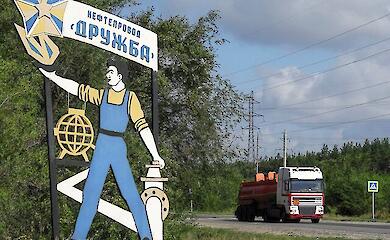
Orban announces "results" of Hungarian mission on Druzhba oil pipeline


Will maternity leave be shortened in Ukraine? Changes for workers with children


Zelensky said that Russia was preparing a new offensive and pointed out the direction of it

Kellogg named the ceasefire condition today and compared Putin to Nicholas II

News about war
Orban announces "results" of Hungarian mission on Druzhba oil pipeline
Kellogg named the ceasefire condition today and compared Putin to Nicholas II
Zelensky said that Russia was preparing a new offensive and pointed out the direction of it

Russia is destroying Ukraine twice as fast as at the start of the war - international report