


Politico: Whoever becomes U.S. president, support for Ukraine will not end


Matthew Kaminski, founder of POLITICO Europe and former editor-in-chief of POLITICO wrote an article about how Donald Trump's victory in the US presidential election will not be the end of support for Ukraine.
According to Kaminski, there is a misconception about what the US presidential election means for the worst ground war in 80 years: Former President Donald Trump and his running mate JD Vance will supposedly end the conflict quickly and reduce US support for Ukraine and NATO, with supposedly disastrous consequences. Kamala Harris will ostensibly become the spokesperson for the Biden era continuity, supporting Ukraine with significant aid packages "for as long as it takes," as her current boss says.
However, as Kaminski argues, neither of these outcomes seems likely. A closer look at Trump reveals a more sympathetic approach to Ukraine. On the other hand, Harris may not follow exactly in Biden's footsteps.
Kaminski notes that there has been a dynamic debate in both camps. These behind-the-scenes discussions mean that theviews and policies of Trump and Harris are still evolving.
For Ukrainians, this is an existential question. Kaminski emphasises that America's decisions on military aid, political signals on any settlement and future support for Kiev will determine the future of the state.
Theapproach to Ukraine will also test future U.S. foreign policy, pointing to the next administration's stance on NATO, commitments to other allies, and attitudes toward an increasingly aggressive China. The stakes go beyond Ukraine's fate in 2025.
Kaminski notes that Harris has not publicly voiced her views on the world since her sudden rise to the top of the Democratic ticket. To foreign officials and voters, she is a blank slate for projecting their hopes and anxieties.
Conversations with Ukrainians close to President Vladimir Zelensky reveal mixed feelings: Harris is reassuring as a team member they know well, but they also want her to move away from the Biden approach once in office.
Kaminski says there are significant divisions within the Democratic Party and between the Biden administration and the pro-Ukrainian camp in Washington. Publicly, Ukrainians and most Democrats credit Biden for building a global coalition and providing unprecedented military and economic support. In private conversations, assessments are less generous, and some Ukrainian officials express criticism.
Biden was cautious about supplying weapons for fear of escalation with a nuclear-armed Russia, which now appears to have been exaggerated. That caution and indecision stalled the Ukraine campaign and caused frustration in Kiev, Kaminski notes.
Tensions peaked during the NATO summit last month. After a Russian missile hit a children's hospital in Kiev, the White House denied Ukraine's request to use U.S.-supplied weapons to strike missile launch sites in Russia. Russia suffered no consequences for that strike.
Biden's cautious approach reflects his team's instincts, Kaminski notes. Foreign policy has been run by a small group of longtime advisers, none of whom are expected to be in the Harris administration.
Ukraine presents an opportunity for Harris to subtly dissociate herself from Biden's policies by clarifying that the U.S. wants Ukraine to emerge victorious, and supporting that with fewer arms restrictions. Harris attended Zelensky's peace summit in Switzerland this summer, where Kaminski said she vigorously supported Ukraine's strategic interests.
The alternative to more vigorous support for Ukraine is to accept Russia's sphere of influence, which would undermine America's strategic interests.
Kaminski observes that there is also an internal struggle over foreign policy within the Trump camp. Trump has sent mixed signals on Ukraine, leaving all sides to project their hopes onto him.
According to Kaminski, Trump's "adieu" led to the election of Vance, Ukraine's worst nightmare. Vance represents a wing of the party that doesn't see Ukraine as America's problem. This faction would end support for Kiev and justify Putin's actions.
At the same time, Trump's ego has adopted a realpolitik-international approach. His administration armed Ukraine with Javelins in 2017, which proved crucial in 2022 when Putin launched a full-scale invasion.
After Vance's nomination, Trump was the first to call Zelensky. According to insiders, the call went well, with Trump promising to seek a just peace and denying that he would help Putin, Kaminski reports.
The call was a signal to the isolationist wing of the Republican Party, Kaminski notes. Earlier this year, Trump backed House Speaker Mike Johnson in approving a $60 billion aid package for Ukraine.
Zelensky and his team have forged ties with Trump allies, including former National Security Council chief Robert O'Brien, Secretary of State Mike Pompeo and Senator Tom Cotton. All three are being considered for national security posts in a potential second Trump administration.
Despite Trump's unpredictable and transactional approach to foreign affairs, Kaminski argues that his victory in November does not necessarily mean the demise of Ukraine or the salvation of Putin. The outcome is uncertain, and Trump's team is still debating its position.
Kaminski emphasises that regardless of who wins, the next president must clearly define US involvement in Ukraine in terms of American interests.
Peace with the spheres of influence sought by China and Russia would hurt America economically and strategically. This argument supports arming Ukraine so that they, not American soldiers, will fight this war, Kaminski writes.
Zbigniew Brzezinski once said: "Without Ukraine, Russia ceases to be an empire." Radek Sikorski updated this, saying, "Russia can either be an ally of the West or a vassal of China. Putin has chosen the latter."
Victory for Ukraine means a sovereign state with a security guarantee from the US. Trump and Harris can do what Biden did not: define that victory and secure Ukraine's place in the Western world, Kaminski believes.
Eugenia Ruban writes about political and economic news. She looks at large-scale phenomena in Ukrainian politics and economics from the perspective of how they will affect ordinary Ukrainians.
Related news
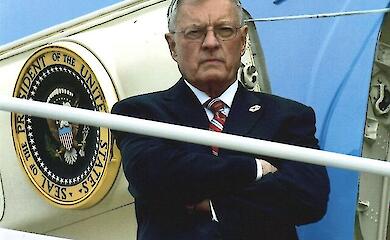
Kellogg named the ceasefire condition today and compared Putin to Nicholas II

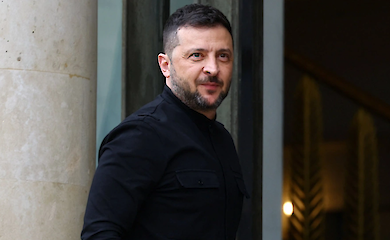

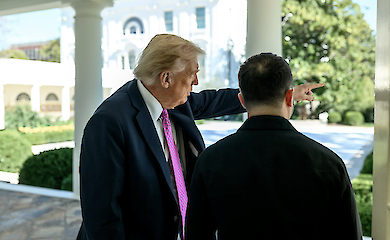
Media reports high risk of negotiations breaking down due to Trump's position
Popular news

Orban announces "results" of Hungarian mission on Druzhba oil pipeline


Will maternity leave be shortened in Ukraine? Changes for workers with children


Zelensky said that Russia was preparing a new offensive and pointed out the direction of it

Kellogg named the ceasefire condition today and compared Putin to Nicholas II
News about war
Orban announces "results" of Hungarian mission on Druzhba oil pipeline
Kellogg named the ceasefire condition today and compared Putin to Nicholas II
Zelensky said that Russia was preparing a new offensive and pointed out the direction of it
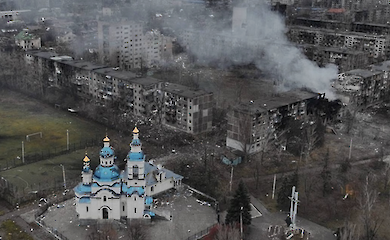
Russia is destroying Ukraine twice as fast as at the start of the war - international report