




Imagine: you write "afrobeat, flute, drums, 90 bpm" in the app and in a minute you have a song ready.
You don't need to play instruments. Suno and Udio do.
But a big conflict with the music industry has started because of them. Major labels (Sony, Universal, Warner) believe that such services could train AI on recordings of famous artists without permission, and because of this they sued back in 2024.
Now the startups are trying to "come over to the peaceful side." According to AP, Suno has already reached a deal with Warner, and Udio has signed licences with Warner and Universal and another major independent group (Merlin). That said, Sony is still continuing to sue.
Why does this matter? Because users have already created millions of AI tracks, and some have even made it to streaming services. Musicians fear that their creativity is being used as "fuel" for AI without payment or consent. For example, singer Tift Merritt of the Artist Rights Alliance says bluntly, "it feels like theft, not innovation."
And supporters of the technology respond: AI is just a new tool that helps people make music faster and makes creativity more accessible to those who didn't go to music school.
The bottom line is simple: AI songs aren't going anywhere, but the main issue being addressed is how to make it fair for artists: who gives permission, who gets the money and what can be generated
Maria Grynevych, project manager, journalist, co-author of Guidebook Sacred Mountains of the Dnieper Region, Lecture Course: Cult Topography of the Middle Dnieper Region.
Related news





Sugar as luxury, spice and weapon of empires: a brief history of the sweet stuff

Popular news

Orban announces "results" of Hungarian mission on Druzhba oil pipeline

Will maternity leave be shortened in Ukraine? Changes for workers with children


Zelensky said that Russia was preparing a new offensive and pointed out the direction of it


Kellogg named the ceasefire condition today and compared Putin to Nicholas II

News about war
Orban announces "results" of Hungarian mission on Druzhba oil pipeline
Kellogg named the ceasefire condition today and compared Putin to Nicholas II
Zelensky said that Russia was preparing a new offensive and pointed out the direction of it
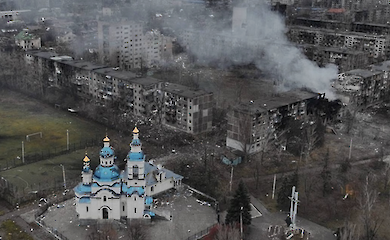
Russia is destroying Ukraine twice as fast as at the start of the war - international report