

How Russian propaganda works in Moldova: an investigation
- Home
- Politics
- Misinfo Monitor
- How Russian propaganda works in Moldova: an investigation


Pro-Russian Propaganda in Moldova and the Current Government's Efforts to Counteract Its Influence
This article was written as part of a project aimed at combating misinformation spread by the Russian Federation about refugees from Ukraine in the EU. It covers large-scale online media monitoring in several EU countries, including Germany, Austria, the Czech Republic, Poland, Romania and Moldova. The media monitoring was conducted in November 2023. The project is supported by CRDF Global. You can also read an article about how Austrian and Polish media outlets spread Russian propaganda.


Moldova, a nation of approximately 2.5 million people situated between Romania and Ukraine, faced challenges to its territorial integrity following the Soviet Union's dissolution. In 1992, after a brief armed conflict, the Transnistrian Moldovan Republic emerged, which has been under de facto Russian control since. Additionally, the autonomous region of Gagauzia in southern Moldova leans pro-Russian.
The Political Landscape of Moldova: A Balance Between the EU and Russia
Moldova's political scene has been notably tumultuous, yet it has facilitated the rotation of political elites, sometimes in extraordinary ways. For instance, from 2009 to 2012, Moldova functioned without an elected president for a record-breaking 917 days. In 2020, pro-Russian President Igor Dodon was succeeded by pro-European Maia Sandu, the current head of state. Sandu collaborates closely with Ukraine and is dedicated to further integrating Moldova with Western entities.
However, former politicians and oligarchs who are currently abroad still wield political influence in Moldova.
Until 2019, the influential figure Vladimir Plahotniuc, who faced criminal charges and U.S. sanctions, dominated Moldovan politics. Others from the former ruling elite, such as Ilan Shor, Veaceslav Platon, and ex-President Igor Dodon, find themselves in similar predicaments.
Though physically outside Moldova, these individuals have retained their wealth within the country and are attempting to reclaim their influence. They leverage the informational power of media outlets they control, covering topics like the pandemic, Russia's invasion of Ukraine, and Moldova's internal territorial issues.
Analyzing Moldova's Information Field: Gagauzia and the Transnistrian Moldovan Republic (TMR)
To understand Moldova's information landscape, it's essential to consider its territorial and ethnic aspects. The population predominantly consists of Moldovans (over 75%), followed by Romanians (7%), Ukrainians (6.6 %), Gagauz (4.6%), and Russians (4%).
Gagauzia: This region in southern Moldova, with a population of around 130,000, is autonomously governed and mainly elects pro-Russian candidates. The Șor party, led by Ilan Shor and associated with Leonid Slutsky, the chairman of the State Duma Committee on International Affairs, has substantial support here. Social media communities affiliated with this party are assumed to be popular. However, Gagauzia shares the official information space with Moldova, where major Russian media outlets were blocked in 2022, followed by their Moldovan franchises in 2023.
Transnistrian Moldovan Republic: In contrast, the TMR, an unrecognized republic along the Moldova-Ukraine border, faces no barriers to being in the same information space as Russia. The TMR, formed after an armed conflict in the early 1990s over developmental orientations, has a population of about half a million, comprising Moldovans, Ukrainians, and Russians in approximately equal proportions. Its armed forces include a Russian peacekeeping contingent of 15,000 personnel, expandable to 80,000 with reserves.

Alexandr Makukhin, a doctor of sociology and founder of the project to help Ukrainians in Moldova dopomoga.gov.md, provided Socportal with exclusive insights into the differences between the information policies of Transnistria and Russia:
If you look at the website of the main news agency in Transnistria, which broadcasts only an anti-Russian view and no other, there are several fundamental points. For example, a large banner with the words 'Peaceful Transnistria' in today's Russia can result in a criminal defamation sentence, as well as articles: 'We want to live in peace for the sake of our children's future'. The letter Z, and the tradition of inserting it into names in general, is also nowhere to be found, and even the public display of Russian flags and St George's ribbons in Tiraspol and other cities does not include any military paraphernalia. At the same time, there is an analogue to the article 'for discrediting' - the article 'for denying the role of peacekeeping forces'. As a result, it turns out that the Russian army in Transnistria cannot be 'discredited', but it is possible to 'deny the role', which is again difficult to imagine in practice, but somehow it works that way, the expert says. (However, in February 2024, the government of Transnistria nevertheless turned to the Russian Federation with a request to lift the “blockade” of Moldova. There was no specific reaction from the Russian Federation, - ed.)
At the onset of the Russian invasion, there was a threat that these forces would align with the occupiers in southern Ukraine. However, this did not occur, and the armed forces of the TMR remain inactive.
For the second year in a row, the Transnistrian leadership has been trying to live in a paradigm that can be described in general by the following set of words: 'something very bad is happening in Ukraine, some kind of war, but we know nothing about it, we are very peaceful, we even accept refugees, but we know nothing about the war and what caused it. There are some negative external circumstances, says Alexandr Makukhin, No doubt, it is much easier to consume conditional Z-content there, no one bans or filters it, but in general, it is becoming more and more difficult for Transnistrian elites to sit on two chairs that have rapidly moved in different directions.
Moldovan historian Alexandru Leșanu notes that the Russian invasion cut off TMR from the Ukrainian border, where a variety of smuggling schemes previously thrived.
Thus, for the first time in its short history, the Republic of Moldova fully controls the turnover of goods on its territory, and Transnistrian businessmen have no alternative but to integrate into the Moldovan customs, tax, and economic systems, says Alexandru Leșanu.
He believes that the future fate of the TMR depends heavily on the situation at the Ukrainian front.

Main Narratives of Russian Propaganda in Moldova
Moldova, where Romanian is the official language and considered the mother tongue by over 80% of the population, also has a notable presence of the Russian language. This is particularly true among the older demographic. Before a blockade on Russian channels, these channels were directly broadcast in Moldova, often without translation, and their franchises predominantly used Russian.
The primary narratives of Russian propaganda in Moldova include:
Criticism of the Moldovan Government: Propaganda often suggests that the government's policies might lead to a situation akin to that in Ukraine or result in Moldova's "joining" Romania.
Anti-Ukrainian Rhetoric: This includes openly aggressive statements and the demonization of Ukraine.
Negative Portrayal of Ukrainian Refugees: There are narratives circulated, especially on social media platforms like TikTok, that claim Ukrainian refugees behave poorly and consume resources meant for locals.
Allegations Against the Moldovan Government: Propaganda claims that under President Maia Sandu's leadership, the Moldovan government is evolving into a "totalitarian regime."
Homophobic Narratives: These include statements about the perceived "soullessness" of the European Union.
Conspiracy Theories During the Pandemic: This includes the spread of various conspiracy theories and promotional content for the Russian Sputnik vaccine.
These narratives are tailored to influence public opinion and political discourse in Moldova, leveraging the widespread use of the Russian language and historical ties to Russia.
A striking example of such narratives is Bloknot, whose official affiliation is difficult to determine. But which, for example, writes complimentary stories about Shor and former Moldovan President Dodon.
It has an article with the headline: Ukraine is running out of conscripts, even women can be taken to the army. It says that "the fear of being mobilised and killed for the Zelenskyy regime is now hovering over the whole of Ukraine" and that "the losses of Ukrainian armed forces are critical".
Or else: Moldova's military and political accession to Romania is being prepared, and the Ukrainian scenario is being implemented, stating that "it is clearly seen that Maia Sandu and her external masters are following the Ukrainian scenario, provoking deliberate destabilisation of the situation, and some political factors from the West want to use Moldovans as cannon fodder in the geopolitical battle that is currently being waged in Ukraine".
During the Covid period, the publication speculated on the topic of vaccination: Scandal! Half a million coronavirus vaccines are overdue in Moldova.
In turn, Politnavigator.net is openly aggressive and anti-Ukrainian.
The coronavirus topic was used exclusively for anti-Ukrainian propaganda and to create apocalyptic images of the situation in Ukraine. For example, there were news stories with the headlines Ukrainian medicine is bursting at the seams - the fight against coronavirus has failed, and Ex-MP is horrified by the lack of tests and real statistics on coronavirus.
In the context of the Russian invasion of Ukraine, the publication published the following news: The Russians are moving fast. We are lagging behind - Kyiv Volunteer, which claimed that "now in the Russian Federation, at various levels, people are learning to fly UAVs, factories for the production of drones are being built in the country, which cannot be said about Ukraine," that Ukraine is running out of combat-ready people, or that "the Armed Forces are on the verge of defeat. It's time to liquidate the Ukraine project, citing the words of an odious political scientist who fled Ukraine after former President Viktor Yanukovych fled.
The publication also criticizes any LGBTQ+ issues in the spirit of modern Russian propaganda.
Another similar outlet is cenzura.md, which published news a la Russian journalist appealing deportation from Moldova to the ECHR, quoting Russian Foreign Ministry spokeswoman Maria Zakharova, or the Russian Foreign Ministry warning Moldova against interfering in the process of supporting Ukraine. During the pandemic, the portal wrote about fake certificates, expired and lost doses of coronavirus vaccine, and that the most popular drug against coronavirus infection in Transnistria was the Russian Sputnik V vaccine, which is known to be manufactured in Russia. However, the portal is currently down, which is obviously due to the blocking of pro-Russian media.
What Media Outlets Have Been Blocked in Moldova
The above narratives are manifested in one way or another in the Russian media or the media of the former Moldovan authorities. And after Russia's full-scale invasion of Ukraine, they began to block them. Currently, the list of blocked media outlets includes about three dozen. The last major blocking took place on 24 October. Russian channels such as First in Moldova, NTV Moldova, and RTR Moldova, TV6 and Orhei TV, which are associated with Ilan Shor, and Prime TV Stations, Canal 2, Canal 3, Publika TV, Mega TV, Canal 5, and Familia, which are associated with Plahotniuc, were banned.
A number of Russian publications, such as Interfax, TASS, Moskovsky Komsomolets, Izvestia, Komsomolskaya Pravda, Argumenty i Fakty, Lenta.ru, and Pravda.ru. Interestingly, the branch of Komsomolskaya Pravda in Moldova is also blocked, but the website has moved to another domain. It has provocative and anti-Western publications, for example, In the new draft National Security Strategy, Russia is Moldova's main enemy: "Maia Sandu is looking forward to hearing from Russia to show her handlers how good I am!" - the expert's opinion. But it is virtually impossible to find news about Ukraine on the website Noi.md is also unblocked, for example, writing about the creation of a chemical waste dump in Ukraine by Soros's son, or uncritically quoting Russian Presidential Press Secretary Dmitry Peskov.
The decision to block a whole bunch of media resources was logically understandable, but problematic in terms of technical implementation and legal justification. On the technical side, the list of blocked media outlets included, for example, RIA FAN, Yevgeny Prigozhin's Informagentstvo, which was officially liquidated in the summer of 2023. Or the aforementioned Komsomolskaya Pravda in Moldova, which has changed its domain and is working perfectly well. There are also a number of questions about the legal support for this decision, which even specialised journalistic NGOs had, and they were never accused of having pro-Russian sympathies, says Alexand Makukhin.
According to him, after a while, the most active propagandists find new ways to reach the audience.
For example, you can't block a YouTube channel as easily as you can a website, and there's nothing to say about the number of anonymous Telegram channels that write in favour of one owner and then resell it to another owner. The volume of such networks is quite large in Ukraine, despite our small country, the expert says.
A striking example of propaganda moving to social media is the telegram channel of the current MP from the Socialist Party, Bohdan Tsyrdia. He spreads various manipulations about the economic collapse of the US and the EU, political instability and all kinds of cataclysms. And at the same time, about Russia's economic growth and military success. The channel also criticizes US policy using false accusations, as well as outright fakes about biolabs in Ukraine. During the pandemic, the channel published posts about the spraying of unknown substances in the United States from an aircraft. The topic of war in Ukraine is almost absent. The channel criticises the current Moldovan government, scaring of economic collapse and "Nazism", criticises the EU and the US, praises the Russian Federation, and broadcasts statements and posts by Russian propagandists on social media.
Telegram channel "Mamalyga and Tokana", associated with the Shor party. The resource promotes Ilan Shor personally, criticising the current government of Moldova in every possible way. The topic of Ukraine is hardly ever mentioned or only in passing in a negative way. The main topics of the channel are criticism of the authorities, criticism of the Western way of life and praise of the Russian Federation.
At the same time, dozens of people on TikTok with the tags "refugees in Moldova" and "Ukrainians in Moldova" claim that Ukrainian refugees are mistreated and take resources from the locals.There are videos against refugees in the style of "we drove Ferraris and attacked people, demanding that they speak Ukrainian everywhere" and about the unfair distribution of resources, when locals "have nothing".
Assessing the Impact of Blocking Propaganda Media in Moldova
According to Alexandr Makukhin, evaluating the effectiveness of blocking propaganda media in Moldova is challenging.
Has it affected the audience? Only a narrow segment — urban, mostly Russian-speaking, often elderly individuals with limited or no Romanian language skills. Lacking computers or funds for them, they feel aggrieved since the blocking of some Russian TV channels, but their political stance remains unchanged. They were already not in favor of the current government, and now they have another reason for their dislike. In contrast, many in my circle supported the decision to block these channels in principle, though they criticized the chaotic and strategy-lacking approach, explains Alexandr Makukhin.
He notes that in the recent local elections, there were no significant shifts in electoral preferences. Older people, generally not supportive of the EU, voted, but the ruling party maintained its lead. These results are credible, as Moldovan elections are functional despite challenges. Over time, with diminished Russian influence, outcomes might differ. Historian Alexandru Leșanu also suggests a waning Russian influence in the Transnistrian region and, consequently, in Moldova.
Makukhin echoes this sentiment:
Russia's influence is diminishing, primarily because the strategist from the bunker has 'outplayed himself'. The Sheriff Corporation in Transnistria, with its sturgeon and caviar farms, expensive football club, and the port of Illichivsk/Chornomorsk dealings, was doing well. Then, suddenly, they're thrust into war. For what?
Currently, Moldovan media coverage of the Russian attack on Ukraine varies from neutral to positive. They report on the struggles of Ukrainian refugees and the assurance that Moldova won't freeze without Russian gas. They mention Oleksandr Matsievskyi, a Hero of Ukraine executed by Russians, who had Moldovan roots, or the EU's consideration of Moldova and Ukraine's accession as a "package". Investigations into the influence of Russian disinformation in Moldova are ongoing.
Therefore, while Russian propaganda persists in Moldova, the authorities are endeavoring, albeit inconsistently, to mitigate its influence.

Expert on women's rights, persons with disabilities, motherhood in the modern context, health care reform, education and social welfare.
Related news
The loss of the middle class: what a new study on Ukrainian refugees showed

Kellogg named the ceasefire condition today and compared Putin to Nicholas II

Britain says under what circumstances Putin will start a war in Europe

Popular news
Orban announces "results" of Hungarian mission on Druzhba oil pipeline

Will maternity leave be shortened in Ukraine? Changes for workers with children

Zelensky said that Russia was preparing a new offensive and pointed out the direction of it
Kellogg named the ceasefire condition today and compared Putin to Nicholas II
News about war
Orban announces "results" of Hungarian mission on Druzhba oil pipeline
Kellogg named the ceasefire condition today and compared Putin to Nicholas II
Zelensky said that Russia was preparing a new offensive and pointed out the direction of it
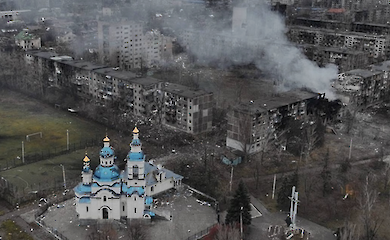
Russia is destroying Ukraine twice as fast as at the start of the war - international report