
Modern fruits that were once eaten by giant animals


How the fruits of the past survive in today's world.
Thirteen thousand years ago, the era of giant mammals in the Western Hemisphere came to an end. Mammoths, mastodons and other large animals that had inhabited the territory of North America for millions of years disappeared within a geological blink of an eye.
Along with them, many species of herbivores disappeared: North American horses, camels, and South American giant sloths, toxodons and glyptodonts. Scientists are increasingly inclined to believe that this mass extinction was linked to human activity - hunters with stone tools.
The juicy and large fruits of modern plants are the result of adaptations to spread them by animals. However, among these fruits are those that appear to be too large or with overly hard seeds, clearly unsuitable for most modern animals.
This phenomenon, according to botanists, refers to the"megafauna propagation syndrome", when plants adapted to symbiosis with extinct giant mammals.


But what happened to the plants that depended on these large animals?
Today, these "mastodon fruits" are found all over the world, but they are hardly ever eaten by humans.
Botanists believe that these plants once spread their seeds thanks to large mammals such as mastodons and giant sloths, which became extinct about 15,000 years ago with the advent of humans.
One such "forgotten" plant is the Osage orange (Maclura pomifera), whose large fruits were thought to have been intended to be eaten by mastodons and other giant herbivores. With the disappearance of these animals, the plant has been left in a quandary: the fruits continue to fall to the ground and rot, and the seeds find no new places to germinate.
In addition, the anachronism theory applies to other plants: wild avocados, locust tree (Gleditsia triacanthos), caffeine tree (Gymnocladus dioicus), papaya (Carica papaya), and many others. These trees once relied on mega herbivores, but today they are forced to adapt to new conditions or disappear.
Ecologist Dan Janzen in 1982, along with palaeoecologist Paul Martin, put forward the theory of "ecological anachronisms", suggesting that some plants have remained "in the past" and continue to exist only because of random factors.
For example, the Osage orange, originally native to the Red River region on the Texas-Oklahoma border, has found a new mate: horses introduced by Spanish colonists. These animals eagerly eat the fruit and help spread the seeds, reviving the species in a new territory.
Mykola Potyka has a wide range of knowledge and skills in several fields. Mykola writes interestingly about things that interest him.
Related news

Traces of inbreeding have been found in the bones of sabre-toothed tigers

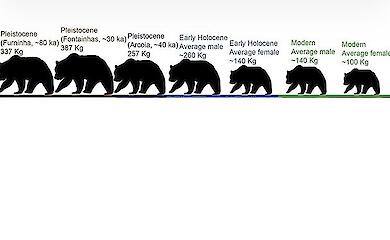
Why did Portugal’s giant bears gradually shrink to almost half their original size?
Scientists have uncovered the secret behind the dominance of female hyenas
Popular news

An antidote to one of the most potent marine venoms has been found in frogs

Traces of water heated to 300 degrees have been found near the “Lost City”

A gold tiara found in a woman’s tomb has astonished archaeologists

News about war

The UN has reported a sharp rise in the number of Ukrainian civilians killed as a result of the war



3 July has been declared a day of mourning in Kyiv. The number of dead and injured is rising