
In superhero films, a difficult childhood is not a sentence for villainy


A new study from scientists at Canada's University of Calgary has revealed that the difficult childhoods of heroes and villains in the Marvel and DC universes do not determine which side they choose in the future.
The results are published in the journal PLOS ONE.
Source: Julia Wigmore et al, "Are adverse childhood experiences scores associated with heroism or villainy? A quantitative observational study of Marvel and DC Cinematic Universe characters," PLOS ONE (2025). DOI: 10.1371/journal.pone.0315268
In actual practice, professionals use the ACE (Adverse Childhood Experiences) questionnaire to assess the number of severe childhood experiences a person has had, ranging from abuse and neglect to various forms of family dysfunction. It is thought that a high ACE score can signal an increased risk of health and behavioural problems in adulthood.
However, superhero movies, from Spider-Man to Batman to Wonder Woman, often feature characters whose troubled early years shape their future path. The scientists decided to test whether this idea holds true, at least in the context of popular films. The team watched 33 films from the Marvel and DC universes, evaluated 28 key characters (19 men, 8 women and 1 character with fluid gender identity) and calculated their "ACE score" based on the childhood traumas shown in the films.
The result was unexpected: high (or low) ACE scores did not automatically make a character a villain - and vice versa. That is, having a tough childhood in films does not at all guarantee a villainous character. The scientists found no statistically significant relationship within any one company (Marvel or DC) or between male and female characters.
This finding, according to the authors, is consistent with the fact that a high ACE score in the real world does not necessarily lead to deviant behaviour - rather, it is a marker of a risk zone where a person may need additional support. The study also emphasises that difficulties in childhood do not doom one to a 'dark' path. Even characters with serious psychological trauma can become positive heroes and serve as examples of resilience for audiences.
Researchers emphasise the need for further work with a wider range of characters, including female characters, and taking into account other psychological factors. It is also important to be clearer about who is considered a hero and who is considered a villain, as some film characters can be morally ambiguous.
By studying heroes and villains, we have seen that anyone can be a protector or a troublemaker, regardless of their experience of childhood trauma," comment the authors. We hope it will inspire young viewers to believe in their own strength, even if their start was not easy.
Maria Grynevych, project manager, journalist, co-author of Guidebook Sacred Mountains of the Dnieper Region, Lecture Course: Cult Topography of the Middle Dnieper Region.
Related news

The official poster of the Ukrainian film "Mavka. A Real Myth."

"Home Alone" reality: the "wet bandits" wouldn't survive half the traps

Scientists have discovered why we flinch when someone gets hurt on screen
How folklore from around the world has spawned the monsters we fear
Popular news
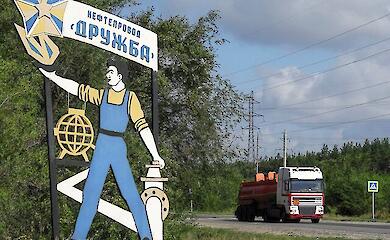
Orban announces "results" of Hungarian mission on Druzhba oil pipeline


Will maternity leave be shortened in Ukraine? Changes for workers with children

Zelensky said that Russia was preparing a new offensive and pointed out the direction of it


Kellogg named the ceasefire condition today and compared Putin to Nicholas II
News about war
Orban announces "results" of Hungarian mission on Druzhba oil pipeline
Kellogg named the ceasefire condition today and compared Putin to Nicholas II
Zelensky said that Russia was preparing a new offensive and pointed out the direction of it
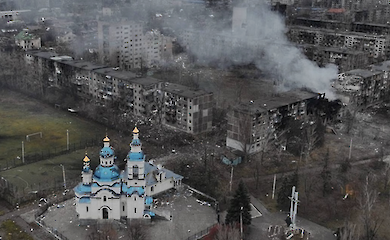
Russia is destroying Ukraine twice as fast as at the start of the war - international report