
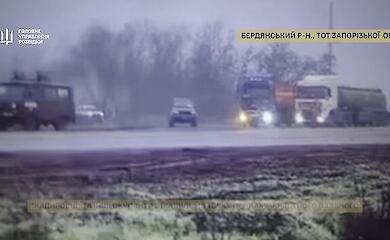

How the war may end and what to consider as Ukraine's victory - Zaluzhny's analysis


Based on a column by the Ukrainian ambassador to the UK, ex-head of the Ukrainian Armed Forces Valeriy Zaluzhny for LIGA.net.
Valery Zaluzhny recalls that by the end of 2023, the military leadership tried to summarise the results of the year and develop a strategy for 2024, but was faced with the feeling that "something was fundamentally wrong". According to him, the physical side of the war had become clear - from the mass use of UAVs to space reconnaissance - but a full-fledged strategy for state behaviour was still not being built.
Zaluzhny relies on Clausewitz's ideas: war is a continuation of politics, and any strategy is meaningless unless a political goal is defined. He recalls the "three-part" nature of war - population, armed forces and state administration - and emphasises that the population is the most sensitive part of the support for war.
According to him, it is impossible to wage war without public support, and the key test of such support is the attitude to mobilisation, which has begun to fail in Ukraine. Zaluzhny recalls Clausewitz's thought: the public must be well informed and able to distinguish "their own" from "foreign", "right" from "wrong".
"The support of the population becomes unconditional when it is directly exposed to danger," he quotes the logic of military science.
Ukraine's lack of political goal and Russia's clear goal
According to Zaluzhny, he once ordered him to pull up all the policy documents coming to the General Staff to see what political goal of the war was officially defined for Ukraine. The answer was simple: there was no such clearly defined goal.
He prepared his own document - "On the political goal of war for Ukraine at the end of 2023" - but did not dare to publish it because of internal political tensions. Certain provisions formed the basis of the AFU's action plan for 2024, which, as Zaluzhny notes, "remained on paper."
In his opinion, Russia's political goal is clearly formulated. Zaluzhny believes that it is not about Donetsk or Lugansk regions and not about "protecting Russian speakers," but about the liquidation of Ukrainian statehood:
"The number one goal for Russia is Ukraine... Ukraine must cease to exist as an independent state," he argues.
The Russian leadership, he analyses, exploits the weakness of the collective West and international institutions by not fully disclosing its true goals and distorting them to attract supporters.
Russia's strategy: from attempted defeat to war of attrition
Zaluzhny details the imbalance of forces on the eve of a full-scale invasion. By the end of 2021, he says, the Russian army was about five times larger than Ukraine's, and Russia was steadily increasing its military budget and re-equipping its army, while the AFU was chronically underfunded, lacking weapons, personnel and combat-ready formations.
Under these conditions, he believes, Russia tried to implement a strategy of defeat - a quick military strike in order to impose a political solution. However, Ukraine withstood the first blow thanks to the heroism of the military and citizens, innovations and help from allies.
"To prevent the enemy from implementing its strategy to achieve a political goal is an absolute victory," Zaluzhny notes, adding that the price was the lives of the best citizens and the loss of part of the territory, but the state survived.
After the failure of a quick defeat, he says, Russia shifted to a strategy of war of attrition. From the spring of 2022, it focused on actions in the east and south, moving the conflict into a protracted format.
Military operations began to be combined with strikes on the economy, propaganda, changes in legislation, and preparation of strategic reserves. Zaluzhny calls the goal of this strategy the deployment of material and political superiority, which would eventually deprive Ukraine of the ability to effectively resist.
War of attrition and risk of civil war
Zaluzhny emphasises that in a strategy of attrition, military operations do not so much resolve the war directly as create conditions for a decisive blow to the political and economic sustainability of the state.
The fight is not for every kilometre, but for symbolic objects that turn into fortresses and draw the sides into protracted hostilities with huge resource costs.
According to him, a decisive blow in a war of attrition for a victimised country can mean not only external defeat but also internal collapse:
"If you recall history, the answer is obvious. It is civil war," Zaluzhny writes, warning that this is exactly what Russia may be consistently pushing Ukraine towards.
He notes that even a "just peace" without real security guarantees and financial programmes may lead not to sustainable security, but to a new phase of conflict - already internal.
What should be Ukraine's political goal and the possible outcome of the war
Zaluzhny suggests looking at the war as a chain of periods with different tasks and possible political goals - from the war prevention phase (2015-2022) to preserving the state and building alliances after 2025. Each of these periods, he argues, should have a clearly articulated political objective that unites the military, political and economic fronts.
In discussing the war's finale, he formulates an extremely hard fork in the road:
"Victory is the dissolution of the Russian Empire, and defeat is the complete occupation of Ukraine through its dissolution. Everything else is just a continuation of the war.
Zaluzhny does not rule out a prolonged ceasefire for years as a historically common way to end wars. Such a peace, he thinks, could provide a window of opportunity for reform, reconstruction, strengthening institutions and building a more secure state - provided corruption is fought and the economy develops.
He sees the key political goal today as denying Russia the ability to commit acts of aggression against Ukraine in the foreseeable future.
At the same time, he doubts the reality of classical security guarantees - joining NATO, deploying nuclear weapons or a large foreign contingent - and concludes that the war will continue in one form or another, both militarily and politico-economically.
In the finale, Zaluzhny returns to the role of internal unity, quoting Olena Teliga:
"States are not held together by dynasties, but by the internal unity and strength of the people."
In his view, without a clear political goal that unites society, the army and the state around long-term security, even the most heroic military feat cannot turn tactical successes into a sustainable and just peace.
Maria Grynevych, project manager, journalist, co-author of Guidebook Sacred Mountains of the Dnieper Region, Lecture Course: Cult Topography of the Middle Dnieper Region.
Related news
Kellogg named the ceasefire condition today and compared Putin to Nicholas II

Britain says under what circumstances Putin will start a war in Europe

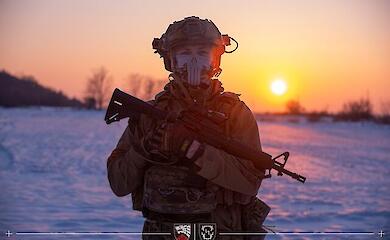
Zelensky said that Russia was preparing a new offensive and pointed out the direction of it
Popular news
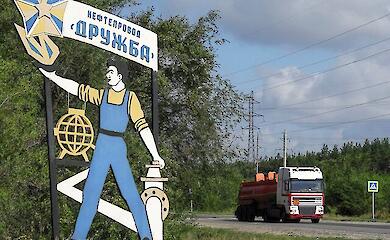
Orban announces "results" of Hungarian mission on Druzhba oil pipeline


Will maternity leave be shortened in Ukraine? Changes for workers with children

Zelensky said that Russia was preparing a new offensive and pointed out the direction of it
Kellogg named the ceasefire condition today and compared Putin to Nicholas II
News about war
Orban announces "results" of Hungarian mission on Druzhba oil pipeline
Kellogg named the ceasefire condition today and compared Putin to Nicholas II
Zelensky said that Russia was preparing a new offensive and pointed out the direction of it
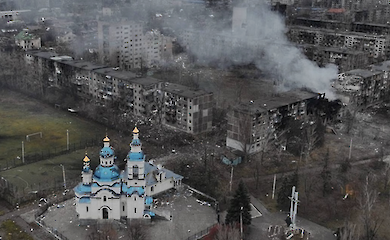
Russia is destroying Ukraine twice as fast as at the start of the war - international report