

Arctic on the brink: how melting ice is accelerating the spread of pollution


Scientists from the University of Bristol (UK) have conducted a large-scale study and found out that the Transpolar Current - the main "conveyor belt" in the Arctic - is not as stable as it was thought to be for more than a hundred years. It is becoming more variable every year, which means that pollution from Siberian rivers could be spreading faster and further across the Arctic.
This current carries fresh water, sea ice and suspended matter - both natural (nutrients, organics) and man-made (heavy metals, microplastics) - from Siberian shores through the central Arctic to the Franz Josef Strait and then to the Atlantic. But the flows no longer follow a straight line: they "dance" depending on the season, temperature and ice condition.

🧪 What did the scientists do?
To understand exactly how these substances move, the team of scientists analysed the water, ice and snow for oxygen and neodymium isotopes, as well as rare earth elements. So they created geochemical fingerprints - the unique "signatures" of Siberian rivers - and tracked how they spread across the ocean.
This data was collected as part of the MOSAiC expedition, the largest Arctic expedition ever. It involved 7 icebreakers and more than 600 scientists from around the world.
🌍 Why it matters
The ice that forms along the Transpolar Current doesn't just float with cargo. It actively collects substances from different rivers and mixes them to create a "cocktail" of freshwater, pollution and organics.
These mixtures can then melt at the other end of the ocean and affect ecosystems and marine circulation.
The less summer ice there is - the more chaotic the routes become, which means it' s harder to predict where pollution will end up.
🧊 The Arctic is unstable
The study also refutes the old notion of the Transpolar Drift as a stable ice 'highway'. It was described by Norwegian explorer Fridtjof Nansen in the 1890s, but 130 years later it's clear: the path has become erratic and unpredictable.
According to lead author Dr Georgi Laukert, even if specific pollutants have not been studied, we now have a better understanding of their transport mechanisms. And this is the first step towards predicting environmental risks in the Arctic.
Maria Grynevych, project manager, journalist, co-author of Guidebook Sacred Mountains of the Dnieper Region, Lecture Course: Cult Topography of the Middle Dnieper Region.
Related news




These microbes survive boiling water and acid - and could help save the Earth

Brussels reacted sharply to the Belgian Prime Minister's call to negotiate with Putin

Popular news
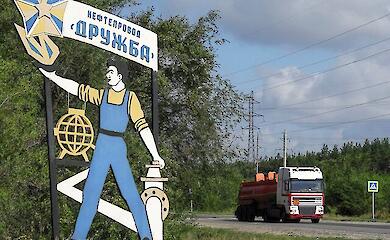
Orban announces "results" of Hungarian mission on Druzhba oil pipeline

Will maternity leave be shortened in Ukraine? Changes for workers with children


Zelensky said that Russia was preparing a new offensive and pointed out the direction of it


Kellogg named the ceasefire condition today and compared Putin to Nicholas II
News about war
Orban announces "results" of Hungarian mission on Druzhba oil pipeline
Kellogg named the ceasefire condition today and compared Putin to Nicholas II
Zelensky said that Russia was preparing a new offensive and pointed out the direction of it
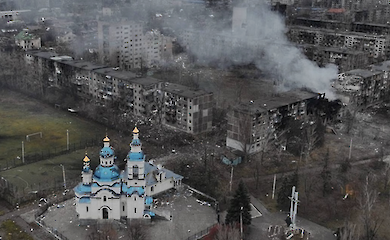
Russia is destroying Ukraine twice as fast as at the start of the war - international report