

Your work stress is passed on to your dog - scientists have explained why


Can't let go of work stress? Your dog feels it - and suffers with you
If you come home from work stressed and can't seem to switch off from your work problems, your four-legged friend is not indifferent to this state. A new study by scientists from Washington State University, published in the journal Scientific Reports, has shown that dogs feel and adopt the stress of their owners. And the matter is not even in the highest level of work stress, but in how much a person is able to mentally "switch off" from work, coming home.
Details: Tanya Mitropoulos et al, Dog owners' job stress crosses over to their pet dogs via work-related rumination, Scientific Reports(2025). DOI: 10.1038/s41598-025-01131-x
Gist of the study
Researchers studied the behaviour of 85 working people who owned dogs. The owners were asked to fill out questionnaires in which they had to describe their stress levels at work and how often they thought about work problems in their free time (so-called rumination). In addition, participants observed the behaviour of their pets, noting signs of stress in the animals.
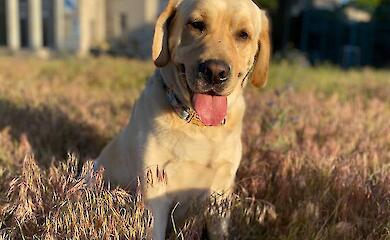
The results were revealing: dogs whose owners often thought about work showed clear signs of anxiety. The animals whined more often, nervously darted around the flat, and became less playful. Interestingly, many owners did not even notice that the behaviour of their pets changed, and did not connect it with their emotional state.
Why is stress transmitted to the pet?
The fact is that dogs are perfectly able to read the emotional state of a person by intonation, gestures, facial expression and even breathing. When a person constantly thinks about work problems, he remains tense, nervous and can not relax. The animal senses this, and as a result also begins to worry.
As the authors of the study point out, dogs don't know about your professional difficulties, job title or conflicts with your boss. But they can definitely sense when their owner is upset, anxious or distracted.
How can you help your dog (and yourself)?
Researchers make a few recommendations on how to minimise the negative impact of your work stress on your dog:
Practice mindfulness. Meditation, deep breathing, or simply being able to "be in the here and now" can help shift your focus from work to home.
Create an end-of-workday ritual. For example, a short walk or a change of clothes signals to your brain (and pet) that work time is over.
Spend quality time with your dog. Put your phone away, play, exercise, or just cuddle with your pet - be fully engaged.
Watch your body language. Remember that animals are very sensitive to your mood, intonation and gestures.
Create a calm atmosphere at home. Animals need stability and calm to feel secure.
Ask for help. If work stress becomes unbearable, consider consulting a psychologist or discuss the situation with management at work.
Study Conclusions
The main conclusion reached by scientists is that work stress does not stay at work - it passes into personal life, and not only people themselves, but also their animals suffer from this. Therefore, it is important to learn how to "switch" in time not to transfer negative emotions to loved ones, including four-legged friends.
Remember: your emotional health directly affects the well-being of your pet. Taking care of yourself is also taking care of those you love.
Maria Grynevych, project manager, journalist, co-author of Guidebook Sacred Mountains of the Dnieper Region, Lecture Course: Cult Topography of the Middle Dnieper Region.
Related news

165 million years ago, the forests were already filled with ultrasound — scientists have discovered who was producing it

Turtles capable of crossing the ocean have unexpectedly turned out to be “homebodies”


Scientists have managed to restore an ageing liver to a partially youthful state
Popular news

Russia has received new weapons from North Korea: which regions of Ukraine could be at risk


Henry VIII’s long-lost castle has been found inside another castle

Bones of ancient humans found on the seabed of the Taiwan Strait suggest they were up to 190 cm tall
News about war

An expert explains how Russia is changing its tactics for strikes on Kyiv


The UN has reported a sharp rise in the number of Ukrainian civilians killed as a result of the war