


Women are more at risk: the dangers of coffee in the evening


How often do you grab a cup of coffee late at night to stay awake?
Anew study by biologists at the University of Texas at El Paso (UTEP) raises anew question: it turns out that nighttime coffee can increase impulsivity and lead to rash behaviour.
The work is published in the journal iScience and is based on experiments with the fruit fly Drosophila melanogaster - one of the key model organisms, whose nervous and genetic mechanisms are similar to those of humans. The paper's authors are Eric Saldes, Paul Sabandal and Kyung-An Han.
"Caffeine is the most common psychoactive substance in the world, and approximately 85 per cent of American adults use it regularly," explains Sabandal. - "However, we know little about additional factors that may influence its effects, especially behavioural control."
In the study, the researchers gave the flies different doses of caffeine, varied the time of ingestion (day or night), and combined caffeine with sleep deprivation. To assess impulsivity, the scientists observed how the insects reacted to a strong airflow, an unpleasant stimulus for them: usually the flies would freeze.
"Normally, fruit flies stop moving when exposed to an airflow," Saldes says. - "But if they were given caffeine at night, they lost the ability to restrain themselves, exhibiting impulsive, even dangerous, flights."
Meanwhile, if caffeine was given to the flies during the day, no such burst of impulsivity was observed.
The researchers were particularly interested in the differences between the sexes: although caffeine levels were similar in females and males, it was the females that showed the most pronounced impulsivity.
"Flies don't have estrogen like humans, so the reasons are more complex - genetic or physiological," notes Professor Khan. - "Understanding these mechanisms will help us understand how nocturnal physiology and sex influence the effects of caffeine."
The scientists warn: the findings may be relevant for people who have to drink coffee at night because of the nature of their work - for example, shift workers, medics or military personnel, especially women.
Maria Grynevych, project manager, journalist, co-author of Guidebook Sacred Mountains of the Dnieper Region, Lecture Course: Cult Topography of the Middle Dnieper Region.
Related news



These microbes survive boiling water and acid - and could help save the Earth

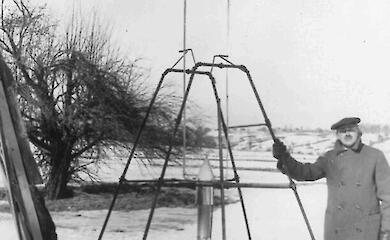
100 years ago, the first rocket was launched - this was the beginning of the space age

Popular news
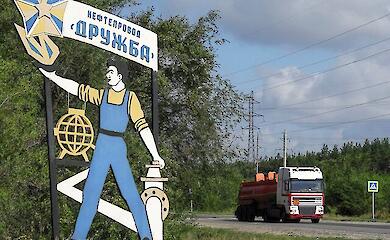
Orban announces "results" of Hungarian mission on Druzhba oil pipeline

Will maternity leave be shortened in Ukraine? Changes for workers with children

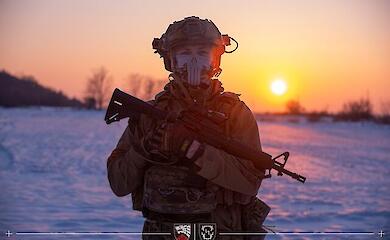
Zelensky said that Russia was preparing a new offensive and pointed out the direction of it


Kellogg named the ceasefire condition today and compared Putin to Nicholas II

News about war
Orban announces "results" of Hungarian mission on Druzhba oil pipeline
Kellogg named the ceasefire condition today and compared Putin to Nicholas II
Zelensky said that Russia was preparing a new offensive and pointed out the direction of it
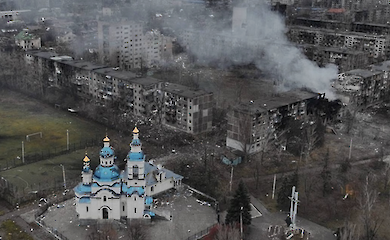
Russia is destroying Ukraine twice as fast as at the start of the war - international report