


Why young Chinese have started hugging trees en masse


Young people in China seek solace in trees - and it's no joke
The Conversation looked at why young Chinese are increasingly hugging trees - and what they find in it.
In the centre of Beijing, trees are everywhere - in parks, along streets and in courtyards. Many of them have been planted only in recent decades, but there are also century-old giants with broad trunks that make you want to cuddle up to them, run your palm over the bark or lean your ear against them, listening to the "life" of the tree.
For a growing number of young people in China, hugging trees is becoming a way to cope with stress, loneliness and emotional overload.
"Hugging is a form of touch," he said
"Hugging trees is about bringing touch back into your life," explains Xiaoyang Wong, head of a forest therapy community in Beijing. She is 35 years old and used to work as a film editor, but felt isolated after the COVID-19 pandemic and changed her profession to become a forest therapist.
According to her, people feel uncomfortable touching trees at first. As part of the therapy, she suggests first observing the tree - the insects, the texture of the bark, the shape of the branches. Only then do participants decide if they are ready to touch or hug it.
Trees as a refuge from stress
On weekends and even late at night in Beijing parks, people of all ages - friends, couples, mothers with daughters - can be seen hugging trees or simply leaning against the trunks in an attempt to relieve the stress of everyday life.
Since the pandemic, loneliness and emotional fatigue have become especially palpable. Meanwhile, many young women in China are increasingly rethinking traditional notions of marriage and seeking alternative forms of intimacy, friendship and support.
Researchers note: trees help people feel "rooted" and "alive".
Why women are more likely to hug trees
In interviews with more than 25 young people in China, the author of the study found that women are more likely than men to turn to tree therapy. They are not only looking for contact with nature, but also for new forms of communication with other people.
Wong adapted classic "forest bathing" practices, adding elements of play and self-expression. For example, participants choose "their" tree, take its name for the day and come up with a gesture that they think reflects the plant's character.
Refusing to chase a career
Many of the women leading these practices have consciously left high-stress professions, choosing part-time work and jobs that involve caring for people and urban nature.
During one of the group sessions, a participant named Florian Mo shared his experiences after a breakup. He said that in Chinese society, the pursuit of love at a young age is often stigmatised, causing people to experience difficulties in relationships later on.
An alternative view of China's urbanisation
For young people like Wong and Mo, trees become a space of self-discovery and emotional connection with others. And while China's urbanisation is usually associated with air and water pollution, this practice shows the other side of reality.
Increasingly, China's younger generation is seeking to heal the urban environment through care, attention and contact with nature - even if this translates into seemingly unusual actions such as hugging trees.
Maria Grynevych, project manager, journalist, co-author of Guidebook Sacred Mountains of the Dnieper Region, Lecture Course: Cult Topography of the Middle Dnieper Region.
Related news

Scientists have found a possible common cause for two symptoms of schizophrenia




Anxiety and depression rise sharply in young people after pandemic - study finds
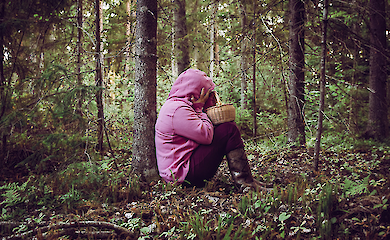
Why, when frightened, we get lost easily - scientists have explained
Popular news
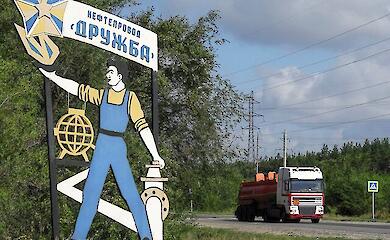
Orban announces "results" of Hungarian mission on Druzhba oil pipeline


Will maternity leave be shortened in Ukraine? Changes for workers with children


Zelensky said that Russia was preparing a new offensive and pointed out the direction of it

Kellogg named the ceasefire condition today and compared Putin to Nicholas II

News about war
Orban announces "results" of Hungarian mission on Druzhba oil pipeline
Kellogg named the ceasefire condition today and compared Putin to Nicholas II
Zelensky said that Russia was preparing a new offensive and pointed out the direction of it
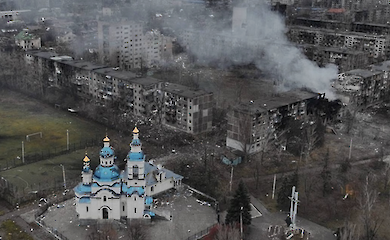
Russia is destroying Ukraine twice as fast as at the start of the war - international report