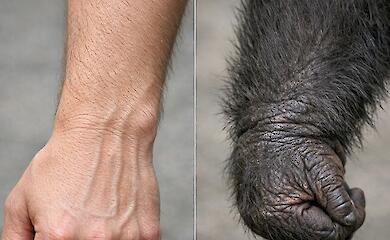

Why we don't notice our friends' shortcomings


We often think we know our friends well: who we can trust, who tends to criticise everything and who sees the good in people. But a new study shows that in friendship we don't always look at a person strictly and accurately. More often we soften the picture a bit.
Psychologist William Chopik from Michigan State University studied the extent to which people understand the cynicism of their friends. It turned out that the participants partially guessed this trait, but on average still considered their friends to be more benevolent and less suspicious than they assessed themselves. The work is published in the journal Evolution and Human Behaviour.
Important: it's not about our friends being "worse" than we think they are. The cynicism in the study isn't anger or bad character, but a tendency to think that people mostly act out of personal gain, aren't always sincere, and aren't overly selfless.
Details
The study involved 173 pairs of friends, a total of 346 people. Each participant rated their own level of cynicism and separately answered how cynical they thought their friend was. The researcher then compared these assessments: how accurate people were, how much they got it wrong for the better, and how much they transferred their own view of people to their friend.
The result was twofold. On the one hand, the friends do understand something about each other: their assessments were not random. On the other hand, they systematically underestimated their friends' cynicism. That is, they saw them as a little more soft, trusting and friendly than they described themselves.
The study also showed a projection effect. More cynical people were more likely to see their friends as cynical. This is a familiar psychological mechanism: if a person tends to expect hidden benefits from others, it is easier for him to see the same attitude in loved ones.
Even so, the overall bias remained positive. The participants did not just "draw a friend from themselves" - they also added a little trust to the image of a friend. And this, according to the researcher, can be useful for relationships: friendship requires not only accurate knowledge, but also a willingness to see the other in a favourable light.
Separately, the author notes new friendships. At the beginning of friendships, people particularly underestimated each other's cynicism. This can be explained simply: for a relationship to work at all, a person needs to give the other a chance. Being too cold and suspicious at the start can keep a friendship from developing.
Why it matters
Friendship doesn't just hold on absolute honesty of perception. If you see all the weaknesses in a friend without a filter, the relationship can become fragile. A small positive illusion helps maintain trust, co-operation and closeness.
But this illusion has a downside. If a person goes too long without noticing the warning signs - selfishness, manipulation, constant devaluation, unreliability - they can invest in relationships that are harmful to them.
The main conclusion, therefore, is not that one should be suspicious of friends. Rather, friendship requires a balance: enough trust to keep the relationship warm, and enough realism to keep an open mind to behaviours that are repetitive and damaging.
Background
Cynicism in psychology is usually understood as a persistent distrust of other people's motives. A cynical person is more likely to assume that those around them are acting out of selfishness, pretending to be kinder than they are, or helping only for gain.
In friendship, this attitude is especially important. If one person is too suspicious, it is harder to trust. If the other idealises a friend too much, they may overlook problems. So researchers are interested not only in what people are "really like," but also in how those closest to them see them.
Chopik's work fits within the broader theme of close relationships research. His lab at Michigan State University studies how personality traits, social environment and relationships influence people's behaviour and their connections with others.
Source
William J. Chopik, "Cynicism among friends: Accuracy and bias in cynicism judgments," Evolution and Human Behaviour, 2026.
The study involved 173 pairs of friends. Participants rated their own cynicism and their friend's cynicism, and then the author analysed how accurate these ratings were and what distortions there were in them. The main finding: people partially guess their friends' cynicism, but tend to see them as more benevolent than they judge themselves to be.
Maria Grynevych, project manager, journalist, co-author of Guidebook Sacred Mountains of the Dnieper Region, Lecture Course: Cult Topography of the Middle Dnieper Region.
Related news
A study has shown how a person’s character changes over the course of their life


Scientists have explored the glacier on the summit of Mount Ararat for the first time


Popular news

Ukrainian security services have been recognised as among the best intelligence services in Europe – L'Express


Irina Levchenko, the abducted Ukrainian journalist, has been transferred to the Donetsk remand centre: what is known


Evidence has been found in Australia of an unusual ritual that has been practised for thousands of generations

News about war

The UN has reported a sharp rise in the number of Ukrainian civilians killed as a result of the war


3 July has been declared a day of mourning in Kyiv. The number of dead and injured is rising