

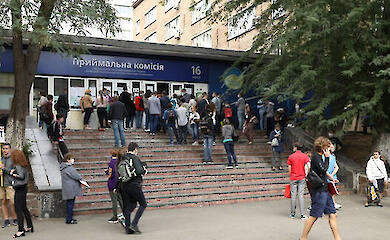
Why September is a key month in the fight against bullying in schools


When schoolchildren return to their desks, it's important to remember: bullying starts on the first of September.
According to Tony Wolk, professor of child and adolescent studies at Brock University, relationships between bullies and victims are formed as early as the first few weeks of the school year, and conflicts from the previous year are often carried over into the new year.
"One of the main reasons kids start bullying is to seek popularity and reputation. And they want to start it from day one," explains Wolk, a member of the research group BRAVE (Brock Research on Aggression and Victimisation Experiences).
September is therefore a key time for teachers and school administrators to formulate a clear position and implement crisis management measures.
"It is much easier to prevent bullying at an early stage than to deal with its consequences later," emphasises the researcher.
While statistics show violence is on the rise in Ontario schools, Volk's team's data demonstrates: with the right resources and focus, some schools are successfully tackling the problem. That means it still depends on approach - and engagement.
What to do if a child is being bullied?
Volk advises victims of bullying to seek support as early as possible - from a teacher, a parent or even a classmate. Participating in clubs or clubs, both online and offline, can also help - any form of social support builds confidence.
Another way is to change your schedule so that you encounter the bully less often, or avoid certain spaces at school.
"Being active is a good way to de-escalate the situation," he adds.
It's also important not to blame yourself: bullying is often not linked to a specific victim.
"It's paradoxical, but many cases of bullying are fairly impersonal. The victim simply becomes a vehicle for a show of force," says Wolk.
Despite the common myth, aggression in response can only make the situation worse.
"Bullying is always about power imbalance. Therefore, you should not expect the victim to overcome it on his own," emphasises the scientist.
Instead - in time to notice the alarm signals. For example, if the child abruptly loses interest in learning or constantly complains of poor health - this is a reason to talk.
What if your child is a bully?
It's important for parents to realise that bullying is often fuelled by a desire for attention and power. But these same goals can be achieved through benevolence. Wolk believes that if a teenager realises that respect can be gained through cooperation rather than bullying, it's the beginning of a healthy social climate.
"The great leaders of the last century were not only strong, but they knew how to build alliances. These skills need to be instilled in children as well," he concludes.
Maria Grynevych, project manager, journalist, co-author of Guidebook Sacred Mountains of the Dnieper Region, Lecture Course: Cult Topography of the Middle Dnieper Region.
Related news

Stress over studying at 15 linked to depressive symptoms at 22 - study


Underground schools of a mining town. How Ukrainian teachers work 60 kilometers from the front


In Zaporizhzhya region, construction of the seventh underground school has already started

Popular news
Orban announces "results" of Hungarian mission on Druzhba oil pipeline


Will maternity leave be shortened in Ukraine? Changes for workers with children
Zelensky said that Russia was preparing a new offensive and pointed out the direction of it


Kellogg named the ceasefire condition today and compared Putin to Nicholas II

News about war
Orban announces "results" of Hungarian mission on Druzhba oil pipeline
Kellogg named the ceasefire condition today and compared Putin to Nicholas II
Zelensky said that Russia was preparing a new offensive and pointed out the direction of it
Russia is destroying Ukraine twice as fast as at the start of the war - international report