

Why "don't steal or cheat" is more important than other virtues - survey data

Not all moral actions are perceived equally - some are stronger than others in shaping a person's first impression and level of trust.
This is the conclusion reached by researchers from the University of Michigan and the University of Illinois. Their work was published in the journal PLOS One.
The authors found out: the most "weighty" for the assessment of other people's character are two types of behaviour - fairness (equal treatment of others) and respect for other people's property. These are the two behaviours that most strongly influence whether a person is considered principled, trustworthy and cooperative.
In a series of experiments, participants were shown short descriptions of everyday situations with fictional characters: for example, whether a person helped a relative, followed rules, showed favouritism, shared merits fairly, respected other people's belongings. People were then asked to rate 'what kind of person' they were, whether the behaviour was related to their character or circumstances, and whether they were willing to trust them.
As the results of three studies involving hundreds of American adults have shown, behaviours related to fairness and property elicit the strongest reactions - both positive and negative. If a person behaves honestly and fairly or respects what belongs to others, he or she is more likely to be perceived as moral and principled, and the act is more likely to be seen as a demonstration of "true character". In such a case, people are more willing to trust him or her and are more willing to interact with him or her.
Violation of these norms, on the contrary, is punished particularly harshly in the eyes of others: deceit, theft, an attempt to appropriate someone else's goods or obvious "blat" sharply reduce the willingness to rely on a person, to share with him or her or to co-operate. At the same time, negative action is also more often interpreted as an indicator of personality rather than chance.
In the final experiment, the scientists tested how stable these assessments under load: participants in parallel performed a distracting task - memorised long sequences of numbers. But even with "overloaded" attention, the reaction to injustice and violations of property boundaries remained strong. This, the authors say, indicates that such moral judgements are largely automatic and intuitive, rather than the result of long deliberation.
The researchers note: other moral qualities - such as loyalty to a group, courage, or respect for authority - are also important, but have a markedly weaker influence on quick social judgements about whether a person can be trusted.
Maria Grynevych, project manager, journalist, co-author of Guidebook Sacred Mountains of the Dnieper Region, Lecture Course: Cult Topography of the Middle Dnieper Region.
Related news


Toxic people in your environment may accelerate ageing, study shows


Scientists show: working with childhood memories helps you fear failure less

Sometimes the brain itself is looking for something to distract itself with - scientists have explained why
Popular news
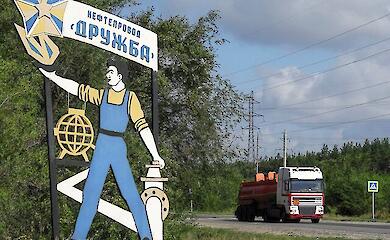
Orban announces "results" of Hungarian mission on Druzhba oil pipeline


Will maternity leave be shortened in Ukraine? Changes for workers with children


Zelensky said that Russia was preparing a new offensive and pointed out the direction of it

Kellogg named the ceasefire condition today and compared Putin to Nicholas II

News about war
Orban announces "results" of Hungarian mission on Druzhba oil pipeline
Kellogg named the ceasefire condition today and compared Putin to Nicholas II
Zelensky said that Russia was preparing a new offensive and pointed out the direction of it

Russia is destroying Ukraine twice as fast as at the start of the war - international report