


Why did Ukrainian medics stop receiving health care benefits: details
- Home
- Society
- War in Ukraine. The storybook
- Why did Ukrainian medics stop receiving health care benefits: details


Employees of budget institutions in Ukraine have the right once a year, when they are granted leave, to receive financial aid for rehabilitation in the amount of the official salary. However, this year, a significant number of medics were left without these payments.
Soсportal found out what these changes are related to and whether they are legal.
Where have the health benefits gone?
In the nurses' Facebook group "Be like Nina", doctors are complaining en masse that they did not receive the expected payments for recovery. In the comments, dozens of medical workers from all over Ukraine claim that the administration is denying them "rehabilitation" under various pretexts. The most common answer is that there is no money because of the war.
"Vinnytsia, Pirogov Hospital, we are waiting...", "Lviv, TMO3 has not been paid. Explaining that they did not follow the schedule", "Cherkasy region, it did not happen! They said that they would give it by the end of the year, but as the year ended, then they turned on the "freezing!" function, "And in Mykolaiv, too, they have not paid health care for 2 years, and they also say that there is a war, there is no money...", the medics write.

The legislative basis for the payment of health benefits for a long time was the third paragraph of clause 2 of the Resolution of the Cabinet of Ministers of Ukraine dated 05/11/2011 No. 524 "The issue of remuneration of employees of institutions, institutions and organizations of certain sectors of the public sector", guaranteeing assistance for health improvement medical and pharmaceutical. It must be paid in the amount of the official salary when granting annual basic leave. In addition, as explained by the Ministry of Health and the Trade Union of Health Workers of Ukraine in a letter dated March 23, 2012 No. 10.01.67/773, No. 03-93 "On the payment of assistance to medical workers for recovery", the payment should take into account all salary increases.
Therefore, relying on this norm, part of the doctors decided to fight for their right to health.
Who has not received wellness for the 22nd year, where to go? Comments like: now there is a war, etc. please do not write. Officials do not refuse bonuses and salaries, one of the nurses writes.
The real fight began a medical worker from the town of Chornobay in Cherkasy Oblast. She filed a lawsuit against the administration of the communal non-profit enterprise "Chornobaiv multidisciplinary hospital of the Chornobayiv settlement council" due to the fact that during her dismissal and settlement, she was not paid health benefits.
On May 24, 2022, the plaintiff filed an application with a request to grant basic annual leave from June 4, 2022 and to pay health benefits. However, the director of the Chornobayiv multidisciplinary hospital of the Chornobayiv settlement council, T. Kozlova, endorsed the claimant's statement with the caveat that "healthcare benefits are not paid due to lack of funds", that is, effectively ignoring the demand for health care benefits. Later, the defendant issued an order "About vacations" No. 52/v/tm dated May 30, 2022, which granted the plaintiff annual basic vacation. At the same time, the specified order did not provide for the payment of benefits to the plaintiff for rehabilitation, — it is stated in the materials of cases.
However, the court sided with the hospital administration and denied the nurse payments.
This became possible due to two key legislative changes — the medical reform of 2017and the Law of Ukraine adopted last year“On the organization of labor relations under martial law”.

By the efforts of Suprun and Tretyakova
According to the lawyer and head of the NGO “Social Movement” Vitalia Dudina, the judge's main argument in favor of the employer was that the hospital is a communal non-profit enterprise, not a budget institution. Instead, the right to receive health care benefits applies only to public sector employees.
After the medical reform of 2017, initiated by the ex-head of the Ministry of Health, Ulyana Suprun, medical institutions transformed into communal non-profit enterprises (NPOs) ceased to be considered budget institutions. And although in essence they continue to be financed from the state budget and perform the same functions, the heads of medical institutions narrowly interpret the scope of Resolution No. 524, because by name it refers to branches of the budgetary sphere, — says Vitaly Dudin.
Yes, the court noted that “the provision of the resolution Cabinet of Ministers of Ukraine No. 524, which the plaintiff refers to, applies only to budgetary institutions, but the defendant is not one of them”. That is, the hospital did not recognize itself as a budgetary institution, and the funds at its disposal are budgetary. The difference between the funds received from the National Health Service and the budget funds is that the funds under the medical guarantee program "must be directed exclusively to the needs regulated by contractual obligations, and the priority is to fulfill the obligations related to the provision of medical care to patients who have concluded agreement with the company's doctors".
According to the logic of the medical reform, the obligation to pay health care benefits to KNP employees arises only if stipulated in the collective agreement, — notes the lawyer.
And if earlier medical workers could really appeal to a collective agreement in such a case, it became more difficult with the adoption of Law No. 2136 authored by Galina Tretyakova. Its article 11 states that in the conditions of martial law, the employer can unilaterally suspend the effect of certain provisions of the collective agreement. And even if this will cause significant changes in working conditions (and the cancellation of health benefits is one of them), the employer does not have to warn employees about it in advance.
In the aforementioned case against the Chornobayiv hospital, the plaintiff already learned about the suspension of the provisions of the collective agreement during the consideration of the case on recovery of material assistance. The court accepted the hospital's argument that the content of the order, which suspended the effect of certain provisions of the Collective Agreement, was repeatedly brought to the attention of the employees of the institution. The hospital did not provide evidence that the employees were informed of these changes under their signatures, but the court did not pay attention to this, — says the lawyer.
Currently, in his opinion, it is extremely difficult to fight for the payment of health care benefits in the legal field without legislative changes. However, certain possibilities remain.

How can doctors regain their right to “healthcare”?
Despite this provision, there are certain opportunities for action at the individual and collective levels.
What can medics do at workplaces?
First — to find out whether the collective agreement has been suspended and whether it contains a norm regarding the payment of health care benefits. With a high probability, such a provision is prescribed, since often collective agreements are created according to a template. As a rule, the payment of assistance is not determined by the financial condition of the enterprise.
If at the time of writing the application for leave with a request to pay mat-dopomogo, the relevant norms of the collective agreement were in force, then you can go to court, demanding the collection of the appropriate payments.
If it is suspended, further actions must be collective.
What can a medical institution trade union do?
The main question — is the trade union independent and can argue with management? If she was not informed about the suspension of the contract or she was against it at all, then there are chances to appeal the management's decision.
There is no direct requirement in Law No. 2136 to coordinate the suspension of the collective agreement with the trade union. The logic of social partnership requires such agreement, but employers can interpret the gap in the legislation to their advantage. There is currently no established court practice, — says lawyer Vitaly Dudin and emphasizes the need to amend Article 11 of Law No. 2136 to prevent administrative abuse.
For example, in the situation with the Chornobayiv Hospital, the order to suspend the norms of the collective agreement was, unfortunately, endorsed by the head of the trade union committee.
If the trade union as a subject of the collective agreement was not involved in the agreement, then such suspension can be questioned from the point of view of procedural issues. For example, the head of one of the medical facilities in Zaporizhzhia simply stated that he did not consider it appropriate to approve such decisions, and the law does not require it. But since the collective agreement stipulates that the parties must adhere to the principles of social partnership when regulating working conditions at the enterprise, the Zaporizhia doctors have every reason to complain to the State Labor Office and the court. In their favor are also the norms of Articles 97 and 247 of the Labor Code of Ukraine, which prohibit unilateral actions by the employer to change working conditions, the lawyer says.
In general, the lawyer reminds that the main task of each trade union — protecting the interests of employees. Therefore, she should demand from the employer the elimination of violations of the collective agreement, which was expressed in the unilateral adoption of a decision on the temporary deprivation of the right to financial assistance.
What can all-Ukrainian trade unions do?
There are two ways — to change the sectoral agreement with the Ministry of Health, enshrining in it a guarantee of payment of health care doctors, and/or to initiate amendments to the Cabinet of Ministers Resolution No. 524, extending its effect to health care institutions operating in the form of communal non-commercial enterprises.
The industry agreement has a higher legal force than the collective agreements of each specific hospital. Therefore, if the trade unions of medical workers succeed in introducing into it the norm on the mandatory payment of health care workers, it will change the legal field in favor of doctors and improve medicine, — notes Vitaly Dudin.
Regarding Cabinet resolution No. 524, it should be added in its text that doctors of communal non-profit enterprises also have the right to health assistance. Instead, it currently states that health care benefits are paid to medical workers of “communal institutions (institutions)”, although almost all of them have turned into public health institutions after the medical reform.
Such changes should be demanded from the Cabinet. According to its Regulations, in making such decisions, he should, in particular, involve all-Ukrainian trade unions and their associations.
Medics' well-being should not suffer due to the fact that officials for years failed to bring the legislation into line with new realities. Doctors had legitimate expectations of receiving payments for rehabilitation, and the state has no right to let them down at such a time. Despite the fact that there is currently a massive reduction in salaries due to the return to the tariff grid for state employees. So, when it is profitable for the administration, hospitals are considered budget institutions, and when it is not profitable, then they are not. In turn, we as a public organization will put pressure on the authorities to correct these legislative deficiencies, — emphasizes Oksana Slobodyan, head of the NGO "Medical Movement “Be like Nina””.

Expert on women's rights, persons with disabilities, motherhood in the modern context, health care reform, education and social welfare.
Related news
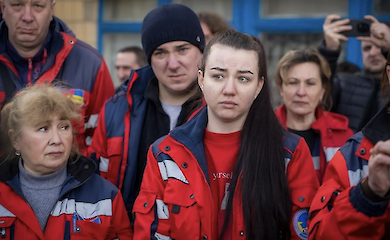
In the Donetsk region, mass layoffs of ambulance medics were canceled after media coverage

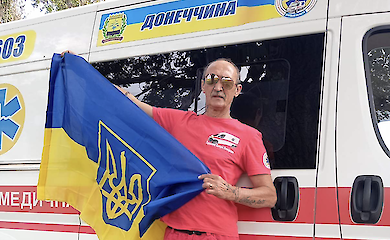
No ambulance near the front line: emergency substation being liquidated in Donetsk region

Why Ukrainian medics who suffered from shelling do not receive proper payments

Scientists: avoiding sleeping pills will improve health and prolong life in the elderly

Popular news

Orban announces "results" of Hungarian mission on Druzhba oil pipeline


Will maternity leave be shortened in Ukraine? Changes for workers with children

Zelensky said that Russia was preparing a new offensive and pointed out the direction of it


Kellogg named the ceasefire condition today and compared Putin to Nicholas II

News about war
Orban announces "results" of Hungarian mission on Druzhba oil pipeline
Kellogg named the ceasefire condition today and compared Putin to Nicholas II
Zelensky said that Russia was preparing a new offensive and pointed out the direction of it

Russia is destroying Ukraine twice as fast as at the start of the war - international report