


Who rests in the barrows of Ireland? A new DNA study is changing the way scientists think


County Meath in the east of Ireland is home to the archaeological site of Bru na Boinne, a complex of huge stone tombs built more than 5,000 years ago. These "tombs with a passage" have long been considered the resting place of the nobility of Neolithic Ireland. But a new study by scientists from Ireland, Britain and Australia is changing the perception of their purpose.
Read more: Neil Carlin et al, Social and Genetic Relations in Neolithic Ireland: Re-evaluating Kinship, Cambridge Archaeological Journal(2025). DOI: 10.1017/S0959774325000058
The scientists combined archaeological data and DNA analysis of ancient remains to better understand who was buried in these tombs. It turned out that most of the people buried were not close relatives - at most distant fifth-degree relatives, like third cousins or third cousins. This suggests that kinship was not a major burial criterion.
Nevertheless, the study shows that the people in these tombs did form genetically related communities.
How is this possible? The researchers believe the answer lies in the lifestyle of these ancient people. They lived in small mobile groups, often travelled with their animals, and on special occasions came together to participate in rituals, festivals and monument building. It was in such large-scale gatherings that bonds, marriages, and a shared sense of community were formed.
Over time, after about 3600 B.C., lifestyles began to change. Houses became simpler and people began to herd more often, while tombs, conversely, became more elaborate, massive and visible. Structures such as Newgrange were built on high ground and built over many generations. People came from all over Ireland - bringing stones, artefacts and their dead. These weren't just funerals - they were whole collective ceremonies, bringing distant communities together.
Interestingly, genetic studies show: people who participated in these rituals and used such tombs were more likely to intermarry within their cultural group. But this doesn't mean that marriages were strictly limited. It was simply easier for people to find a mate among those with whom they shared customs, festivals and beliefs.
The researchers found no traces of rigid social hierarchy, coercion or "elite access" to the tombs. On the contrary, everything points to the fact that these places were symbols of joint endeavour and shared rituals, not prestige or status.
This discovery changes the way we look at ancient Ireland: instead of a culture of chiefs, there is a culture of community. Instead of heroic loners, there are collective actions and rituals that unite people for centuries.
An independent researcher, interested in archaeology and sacred geography. He researches them and writes about them.
Related news
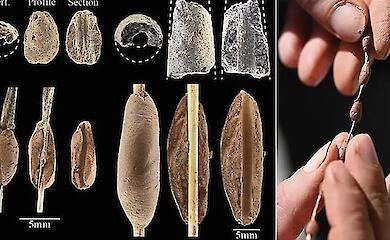
Archaeologists have found children's fingerprints in 15,000-year-old clay

Traces of an "ancient machine gun" have been found in Pompeii
Scientists have found a huge bone from a possible ancestor of T. rex
Popular news

Orban announces "results" of Hungarian mission on Druzhba oil pipeline


Will maternity leave be shortened in Ukraine? Changes for workers with children


Zelensky said that Russia was preparing a new offensive and pointed out the direction of it


Kellogg named the ceasefire condition today and compared Putin to Nicholas II

News about war
Orban announces "results" of Hungarian mission on Druzhba oil pipeline
Kellogg named the ceasefire condition today and compared Putin to Nicholas II
Zelensky said that Russia was preparing a new offensive and pointed out the direction of it

Russia is destroying Ukraine twice as fast as at the start of the war - international report