

What the Scythians ate, the tartar tells us


Dental plaque revealed the diet of the Scythians
Researchers have obtained the first direct biomolecular evidence that the diet of Iron Age Scythian communities included milk and probably processed milk products from different animals - primarily cattle, sheep and goats, and in one case also horses.
Theconclusions were reached by an international team led by scientists from the University of Basel and the University of Zurich by analysing proteins preserved in mineralised dental plaque (tartar).
The material were samples of dental calculus from 28 people buried at the monuments of Bilsk (Bilsk) and Mamai-Gora (Mamai-Gora) in Ukraine.
Tartar works as a kind of "archive" of human life: it accumulates over the years and can hold micro traces of food, including proteins.
The team used palaeoproteomic analysis, a method that allows them to find and recognise ancient proteins. As a result, six people showed proteins indicating consumption of dairy products from ruminants (cows/sheep/goats), and one had proteins consistent with mare's milk. This is important because the consumption of mare's milk among the Scythians was previously mostly discussed based on historical evidence, but direct "traces in the body" were lacking.
The authors emphasise that the horse milk find raises new questions: why such a signal was found in only one individual - because of the specificity of protein preservation or because mare's milk was a rare practice linked to local traditions, status or resource allocation.
The study fits into a more modern view of the "Scythians" as not a single people, but a wide range of different groups in the steppe zone with different lifestyles, ranging from mobile pastoralism to a combination of pastoralism and agriculture. In this sense, direct data on dairy products help to clarify exactly how their economy and nutrition worked in specific territories and communities.
At the same time, the scientists clarify: the work is only the first step, and a more complete picture requires large samples from different regions of the Eurasian steppe and different periods.
An independent researcher, interested in archaeology and sacred geography. He researches them and writes about them.
Related news
Archaeologists have found children's fingerprints in 15,000-year-old clay

Traces of an "ancient machine gun" have been found in Pompeii
100 years ago, the first rocket was launched - this was the beginning of the space age

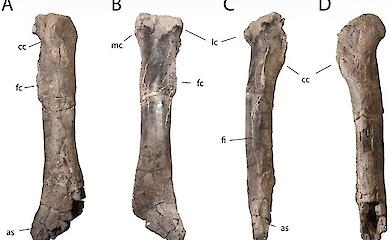
Scientists have found a huge bone from a possible ancestor of T. rex
Popular news
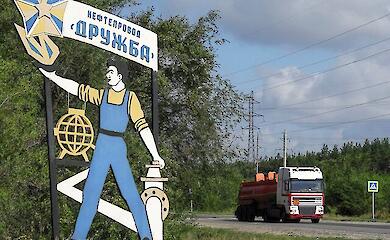
Orban announces "results" of Hungarian mission on Druzhba oil pipeline


Will maternity leave be shortened in Ukraine? Changes for workers with children


Zelensky said that Russia was preparing a new offensive and pointed out the direction of it


Kellogg named the ceasefire condition today and compared Putin to Nicholas II

News about war
Orban announces "results" of Hungarian mission on Druzhba oil pipeline
Kellogg named the ceasefire condition today and compared Putin to Nicholas II
Zelensky said that Russia was preparing a new offensive and pointed out the direction of it
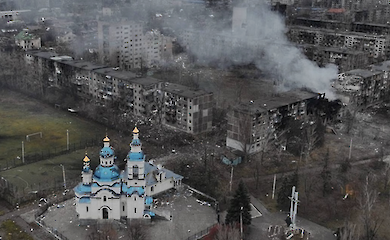
Russia is destroying Ukraine twice as fast as at the start of the war - international report