

West has paid Russia more for oil and gas than it has given aid to Ukraine - BBC


The West is funding both Ukraine and the aggression against it - Russia has tripled its revenues from fuel exports.
The Kremlin's revenues from energy sales are three times higher than Western aid to Kiev. Since the beginning of the full-scale invasion of Ukraine, Russia has earned three times more from exporting fossil fuels than Kiev has received international aid. This is according to data from the Centre for Research on Energy and Clean Air (CREA), cited by the BBC.
Analysts say that even countries that publicly condemn Russian aggression and have imposed sanctions against Moscow continue to buy oil and gas, thus providing the revenue needed to wage war.
The tally is in the hundreds of billions
Russia's total revenue from hydrocarbon exports since the invasion began has totalled more than 883 billion euros ($973 billion). Of that amount, 228 billion euros came from countries that formally declared sanctions. At the same time, 209 billion euros came from European Union countries.
Despite the cessation of Russian gas transit through Ukraine in January 2025, supplies to Europe have not only not decreased, but have increased. According to CREA, exports through Turkey increased by 26.77 per cent in January and February 2025 compared to the same period last year.
In 2024, Russia's crude oil exports increased by 6 per cent and pipeline gas exports by 9 per cent. Liquefied natural gas (LNG) exports have reached historic highs, with half of all Russian LNG volumes shipped to the EU.
Europe is afraid of rising energy prices
Experts point to the key reason for the passivity of Western governments: fear of rising oil and gas prices. As a consequence, they are not ready to fully restrict trade with Russia. However, representatives of the expert and activist communities believe that the West has effective leverage.
Sanctions work poorly, the "shadow fleet" continues to operate
According to Vladimir Milov, Russia's former deputy energy minister and now an opposition politician, the existing sanctions on oil and gas trade are ineffective. He argues that the price caps adopted by the G7 countries are not actually working. More effective, he says, would be pressure on the "shadow fleet" - the network of tankers that Russia uses to circumvent sanctions.
Lower oil prices will not help - on the contrary
Some analysts, including those polled by the BBC, are sceptical of statements by former US president Donald Trump, who suggested that lower oil prices from OPEC could stop the war.
"Moscow is laughing at this idea," Milov says.
He recalls that such measures would hit hardest the US shale oil industry, which is the least competitive in the world.
CREA analyst Vaibhav Raghunandan adds: "The cost of oil production in Russia is lower than OPEC countries. If prices fall, they will be the first to suffer, not Russia." He says Saudi Arabia is unlikely to agree to such a move as similar attempts in the past have already led to tensions with the US.
The West's double standards
Experts emphasise the moral and practical contradiction in the actions of Western countries.
"We find ourselves in a situation where we are financing an aggressor in a war that we condemn, while at the same time supporting the victim of this aggression," BBC analyst Justin Rosner summarises the situation.
Journalist and volunteer with extensive experience.
Related news

The UN has reported a sharp rise in the number of Ukrainian civilians killed as a result of the war


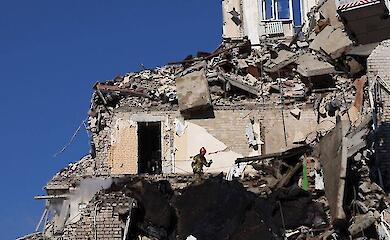
3 July has been declared a day of mourning in Kyiv. The number of dead and injured is rising

Popular news
Ukrainian security services have been recognised as among the best intelligence services in Europe – L'Express


Irina Levchenko, the abducted Ukrainian journalist, has been transferred to the Donetsk remand centre: what is known
Russia has attacked Lviv with drones and missiles: dozens of residential buildings have been damaged and there are casualties

Traces of a vast ancient civilisation have been found beneath the Amazon rainforest

News about war
The UN has reported a sharp rise in the number of Ukrainian civilians killed as a result of the war
3 July has been declared a day of mourning in Kyiv. The number of dead and injured is rising