


Ukraine's main resource is not foreign aid, but its own citizens
- Home
- Overseas
- Refugees. How to survive
- Ukraine's main resource is not foreign aid, but its own citizens

Experts called for investing in Ukrainians "remaining" in the country rather than waiting for the return of refugees.
According to Sanna Marin, former prime minister of Finland and strategic adviser to the Tony Blair Institute, Ukraine's greatest wealth lies not outside but within. Millions of Ukrainians willing to work, retrain and rebuild the country can accelerate Ukraine's post-war recovery and ensure its sustainability for many years to come.
"Ukraine's true recovery requires more than military aid and financial support," writes Marin in an article for Politico. - "What is needed is a deep and sustained investment in the people who form the backbone of a sovereign state."
She notes that the country cannot wait for all the refugees to return to begin a massive rebuilding effort.
In her view, it is those citizens already inside the country who represent the greatest untapped potential. According to the Tony Blair Institute, implementing measures to bring people into the economy could expand Ukraine's labour force by 25% even in the face of war.
Research shows that there are about three million citizens in Ukraine who could be actively involved in the economy if the right conditions were created. Among them are mothers without access to kindergartens, internally displaced persons, veterans, people with disabilities and young people.
"We are not talking about abstract categories," Marin emphasises, "these are concrete people facing difficulties in finding suitable jobs and conditions for full participation in the life of the country."
Experts point out that current social and economic barriers severely limit citizens' opportunities. For example, unemployment among internally displaced persons exceeds one third, 83 per cent of Ukrainians with disabilities are unemployed, and women face a 15 per cent employment gap compared to men.
Marin emphasises: "Ukraine has a digital infrastructure that is the envy of even some European countries, and its citizens show a high willingness to retrain and move for work. About 40 per cent of the unemployed are ready to learn new professions, and a quarter of them are ready to change their place of residence in order to find a job".
The author identifies four key areas where Ukraine's international partners can assist in unlocking this potential:
Modernising the labour market using digital technologies to quickly match vacancies and retraining programmes.
Linking retraining programmes to real jobs created by employers.
Accelerating the adoption of a new labour code of Ukraine that will replace the 1971 Soviet code and comply with European standards.
Removing systemic barriers to participation in the economy for women, the elderly, people with disabilities and internally displaced persons.
"These changes are economically necessary and morally justified," Sanna Marin said confidently. - "Ukraine's partners should make employment and retraining a priority for financial assistance."
The author emphasises that while the return of refugees is important for long-term recovery, Ukraine cannot rely on this alone.
"Recovery does not start with the return of people, but with reforms," concludes Marin.
According to her, Ukraine has already proved its courage on the battlefield, but now the country needs partners willing to invest in its main asset - its own citizens - who can not only rebuild, but take it to a new level of development.


Maria Grynevych, project manager, journalist, co-author of Guidebook Sacred Mountains of the Dnieper Region, Lecture Course: Cult Topography of the Middle Dnieper Region.
Related news
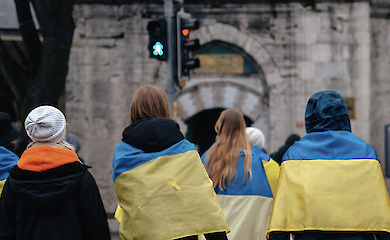
The loss of the middle class: what a new study on Ukrainian refugees showed


Berlin suggested that Ukraine reduce the number of men leaving the country for the EU


Will maternity leave be shortened in Ukraine? Changes for workers with children


Former British Prime Minister Rishi Sunak has become Zelensky's economic recovery adviser
Popular news
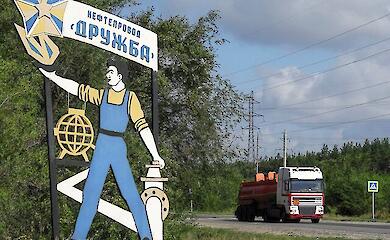
Orban announces "results" of Hungarian mission on Druzhba oil pipeline

Will maternity leave be shortened in Ukraine? Changes for workers with children

Zelensky said that Russia was preparing a new offensive and pointed out the direction of it

Kellogg named the ceasefire condition today and compared Putin to Nicholas II

News about war
Orban announces "results" of Hungarian mission on Druzhba oil pipeline
Kellogg named the ceasefire condition today and compared Putin to Nicholas II
Zelensky said that Russia was preparing a new offensive and pointed out the direction of it
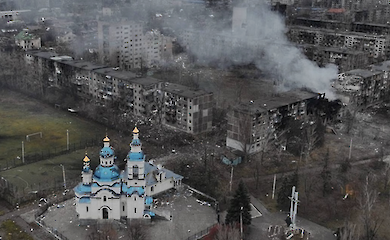
Russia is destroying Ukraine twice as fast as at the start of the war - international report