
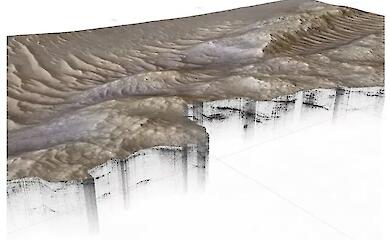

Traces of an "ancient machine gun" have been found in Pompeii


Scientists have found unusual traces on the walls of ancient Pompeii, which may be the result of rapid-fire weapons. It is about the possible use of polybola, a device capable of firing projectiles in series. The discovery helps to better understand how the siege of the city took place before the eruption of Vesuvius.
Archaeologists have long noticed various types of damage on the northern walls of Pompeii. Large round indentations were attributed to the impact of stone nukes from catapults, but other smaller, quadrangular holes, arranged in a fan-shaped pattern, were also found near them.
Previously, they were thought to be normal signs of destruction, but a new study suggests a different explanation.
Details
The scientists created highly accurate 3D models of the damage using laser scanning and photogrammetry. Analyses of the shape, depth and location of the holes showed that they could have come from rapid and consistent shelling.
According to the researchers, such traces could have been left by a machine called polybol (polybolos) - an ancient mechanism capable of automatically feeding and releasing bolts one after another.
The characteristic fan-shaped arrangement of holes coincides with the way such a device could "scour" a section of the wall when shooting.
Additional evidence was found by comparing it with ancient engineering descriptions and actual shells from other Roman military monuments.
Scientists attribute this damage to the siege of Pompeii by Lucius Cornelius Sulla in the 1st century B.C. Thanks to the fact that the city was soon buried under the ashes of Vesuvius, traces of the battle have survived almost unchanged.
Why it matters
The study helps to:
- better understand the military technology of antiquity
- clarify the details of the siege of Pompeii
- revise the level of development of ancient weaponry
Scientists say such findings could change the way we think about the capabilities of ancient armies - some mechanisms may have been much more sophisticated than thought.
Background
The polybolus was described as early as in ancient sources as a type of catapult with automatic projectile delivery. However, actual evidence of its use remains rare.
Source
The new study is published in the journal Heritage and is based on analysing damage to the walls of Pompeii using modern digital techniques.
An independent researcher, interested in archaeology and sacred geography. He researches them and writes about them.
Related news
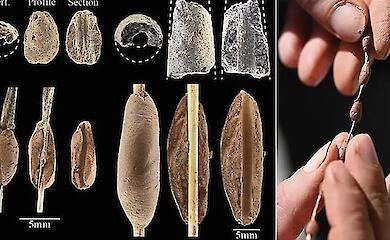
Archaeologists have found children's fingerprints in 15,000-year-old clay


100 years ago, the first rocket was launched - this was the beginning of the space age

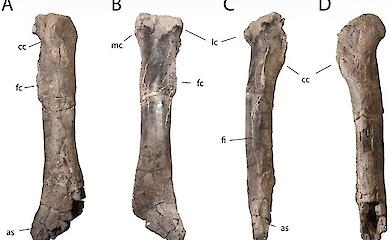
Scientists have found a huge bone from a possible ancestor of T. rex
Popular news

Orban announces "results" of Hungarian mission on Druzhba oil pipeline


Will maternity leave be shortened in Ukraine? Changes for workers with children


Zelensky said that Russia was preparing a new offensive and pointed out the direction of it


Kellogg named the ceasefire condition today and compared Putin to Nicholas II

News about war
Orban announces "results" of Hungarian mission on Druzhba oil pipeline
Kellogg named the ceasefire condition today and compared Putin to Nicholas II
Zelensky said that Russia was preparing a new offensive and pointed out the direction of it

Russia is destroying Ukraine twice as fast as at the start of the war - international report