


The world's largest iceberg could collide with an island. Scientists predict


Megaraisberg A23a, which is twice the size of London, is slowly drifting towards the remote Antarctic island of South Georgia.
Scientists fear that this giant could disrupt the feeding paths of baby penguins and seals, because it is on this island where they breed their young, reports phys.org.
According to the British Antarctic Survey, the iceberg has not yet broken apart, despite being stuck for decades in Antarctic waters. It broke off from the Antarctic ice shelf back in 1986 and stayed in one place for more than 30 years. It wasn't until 2020 that A23a began to gradually move north, sometimes swirling in sea currents that slowed its journey.
Now, according to oceanographer Andrew Meyers, the current could carry the ice block to the shallow waters around South Georgia in about two to four weeks. The most unpredictable thing will happen when the iceberg reaches the shoals: it could either pass further out into the open ocean or get stuck and split. If it snags on the seabed, it could be a serious problem for the penguins and seals living on the island. They usually have to swim to feeding grounds in the ocean, and an iceberg can either physically block their path or increase the distance they have to swim to find food. The extra energy expenditure results in less food for the cubs and their survival rate decreases.
The situation is exacerbated by the outbreak of bird flu, which has already complicated the breeding season on the island. However, there is a positive aspect: when the iceberg melts, it releases nutrients into the water that encourage phytoplankton to bloom. This is a food source for many species, including whales. Scientists are using cases like this to learn how active plankton growth helps absorb carbon dioxide from the atmosphere.
While there is some chance that A23a will avoid the island, there is a risk that individual fragments will still reach the shore. It is also known that such "giants" can get stuck in shallow waters, affecting the marine ecosystem and the lives of animals that depend on uninterrupted access to food.
Scientists will continue to observe A23a and analyse its interaction with sea currents.
Maria Grynevych, project manager, journalist, co-author of Guidebook Sacred Mountains of the Dnieper Region, Lecture Course: Cult Topography of the Middle Dnieper Region.
Related news
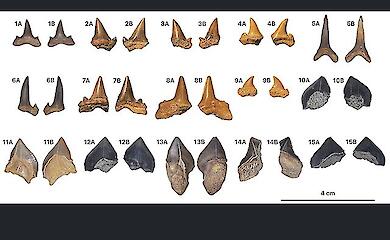
A ‘shark graveyard’ dating back some 80 million years has been discovered in the Egyptian desert




165 million years ago, the forests were already filled with ultrasound — scientists have discovered who was producing it

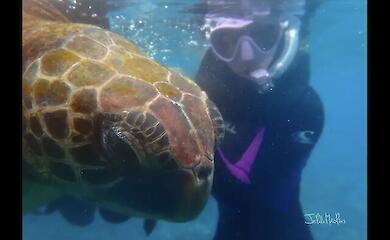
Turtles capable of crossing the ocean have unexpectedly turned out to be “homebodies”
Popular news

Russia has received new weapons from North Korea: which regions of Ukraine could be at risk


Henry VIII’s long-lost castle has been found inside another castle

Bones of ancient humans found on the seabed of the Taiwan Strait suggest they were up to 190 cm tall

News about war


An expert explains how Russia is changing its tactics for strikes on Kyiv


The UN has reported a sharp rise in the number of Ukrainian civilians killed as a result of the war

