
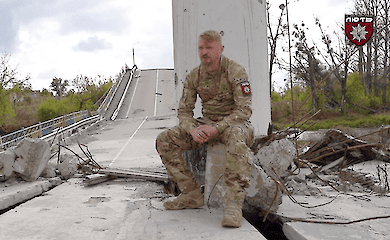
The use of exoskeleton for the wounded was demonstrated in the State Border Service


The exoskeleton provides motor support and prevents joint inflammation.
Physical therapists of the State Border Service are mastering the exoskeleton, which will help to put patients on their feet. This is reported by the State Border Service.
Medics of the state Border service received the first exoskeleton, conducted a short training under the guidance of engineers of the company-developer and have already moved to practical training on its use.
Now, to train the operators, border guard Alexander, who is also undergoing treatment after a wound but has no problems with the musculoskeletal system, has agreed to be a patient. Therefore, physical therapists can practise the skills of operating the exoskeleton without harming the patient," the report said.
Once the training is completed for patients who will need the exoskeleton for rehabilitation, the equipment will begin to be used for its intended purpose.
The acquisition of the exoskeleton was made possible thanks to the European Union's Integrated Border Management Resilience project.
The project is funded by the EU and implemented by the International Centre for Migration Policy Development to meet the needs of the services involved in securing the state border of Ukraine.
Expert on women's rights, persons with disabilities, motherhood in the modern context, health care reform, education and social welfare.
Related news
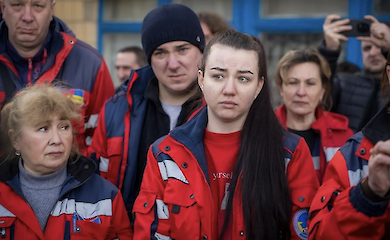
In the Donetsk region, mass layoffs of ambulance medics were canceled after media coverage

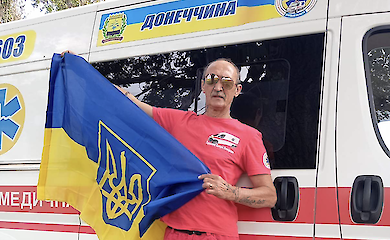
No ambulance near the front line: emergency substation being liquidated in Donetsk region


Scientists: avoiding sleeping pills will improve health and prolong life in the elderly

Popular news
Orban announces "results" of Hungarian mission on Druzhba oil pipeline


Will maternity leave be shortened in Ukraine? Changes for workers with children

Zelensky said that Russia was preparing a new offensive and pointed out the direction of it


Kellogg named the ceasefire condition today and compared Putin to Nicholas II

News about war
Orban announces "results" of Hungarian mission on Druzhba oil pipeline
Kellogg named the ceasefire condition today and compared Putin to Nicholas II
Zelensky said that Russia was preparing a new offensive and pointed out the direction of it
Russia is destroying Ukraine twice as fast as at the start of the war - international report