


Shelling of Kiev: the Air Force reported about Russia's anti-record


On the night of 28 August, Kiev experienced one of the most powerful attacks during the full-scale war.
Russian missiles and kamikaze drones struck the capital and for the first time destruction was recorded in all districts of the city. According to the head of the KSCA, Timur Tkachenko, residential houses, social facilities and infrastructure were damaged, including the regional hospital in Podilskyi district.
Up to 80 houses were damaged in Goloseevsky district, and there are thousands of broken windows in the city. Residents lost transport, some houses were left without gas and light. Rescuers, life support services and mobile centres of the Interior Ministry and HMS are working on the ground to help restore documents.
According to Tkachenko, all city and regional services operate in a constant coordination mode, reporting on the work done every few hours. A total of 33 locations with the consequences of the shelling have been recorded in the capital, with rescuers involved in 18 of them.
The number of victims of the attack continues to grow. By mid-afternoon, rescuers had unblocked another body, bringing the death toll to 18.
The attack caused widespread destruction in Darnitsky district, where a missile hit a five-storey building, completely destroying one of the entrances. Traffic on a number of streets in the capital is blocked.
President Volodymyr Zelenskyy condemned another terrorist strike and appealed to international partners, including China and Hungary, to take decisive action against Russian aggression.


Journalist and volunteer with extensive experience.
Related news
Orban announces "results" of Hungarian mission on Druzhba oil pipeline


Kellogg named the ceasefire condition today and compared Putin to Nicholas II


Zelensky said that Russia was preparing a new offensive and pointed out the direction of it

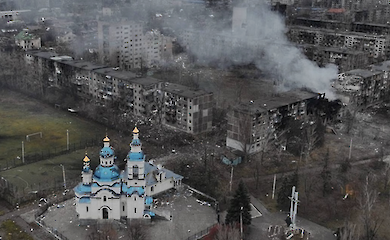
Russia is destroying Ukraine twice as fast as at the start of the war - international report
Popular news
Orban announces "results" of Hungarian mission on Druzhba oil pipeline

Will maternity leave be shortened in Ukraine? Changes for workers with children

Zelensky said that Russia was preparing a new offensive and pointed out the direction of it
Kellogg named the ceasefire condition today and compared Putin to Nicholas II
News about war
Orban announces "results" of Hungarian mission on Druzhba oil pipeline
Kellogg named the ceasefire condition today and compared Putin to Nicholas II
Zelensky said that Russia was preparing a new offensive and pointed out the direction of it
Russia is destroying Ukraine twice as fast as at the start of the war - international report