
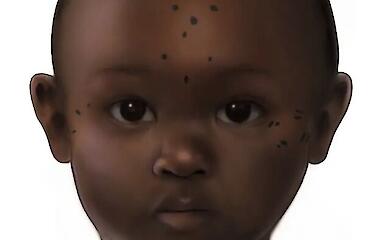

Scientists: two species of humans emerged from Africa at once


Palaeontologists have found traces of a second species of 'pioneer'.
Anthropology textbooks usually attribute the "exit from Africa" to one main candidate - Homo erectus. It is believed that he was one of the first to establish himself outside the continent about 1.8 million years ago. But the famous finds from Dmanisi, Georgia, have fuelled the controversy for years: the five skulls found at the site are too different in structure to be unequivocally considered "one family".
A new paper in PLOS One suggests a more complex scenario: at least two closely related species of ancient humans could have emerged from Africa almost simultaneously. The team led by Victor Neri (University of São Paulo) decided to test the hypothesis not on the shape of skulls (bones are often deformed), but on the teeth - one of the most reliable "passport species" in paleoanthropology.
What exactly were studied
The authors took three Dmanis specimens with well-preserved posterior teeth (premolars and molars): D4500-D2600 (known as Skull 5), as well as D2282-D211 and D2700-D2735. They then compared the crown area of these teeth to a large sample of fossil hominins and used statistics (linear discriminant analysis) to see which groups were closer in "dental profile".
The result: the samples were "dispersed" on different branches
In the resulting "biological map", the D4500-D2600 complex was noticeably separated from the other two and in a number of comparisons came closer to more primitive forms (up to Australopithecus). The other two Dmanisian specimens looked more "hominid" and in morphospace were located closer to representatives of the genus Homo.
Based on this, the authors support the division of the Dmanisian series into two taxa: Homo georgicus for D4500-D2600 and Homo caucasi for D2282-D211 and D2700-D2735.
What if they are just males and females?
A key objection to the argument goes like this: the differences could be the result of sexual dimorphism (larger male vs. smaller female). To test this, the researchers compared tooth size ratios in the Dmanis finds with ranges in chimpanzees and gorillas - species where males are indeed noticeably larger than females. The authors note: tooth ratios alone cannot completely "remove" the version of dimorphism, but, according to their interpretation, the set of differences is better explained by the coexistence of the two species at the same monument.
Why it is important for the history of migrations
If two species are indeed represented at Dmanisi, then early human dispersal from Africa may not have been a single "march" of Homo erectus, but a more complex process with several lineages that travelled beyond the continent almost synchronously and adapted differently to Eurasian conditions. At the same time, the researchers emphasise that new findings and additional independent methods of comparison will be needed for a final consensus.
An independent researcher, interested in archaeology and sacred geography. He researches them and writes about them.
Related news
Archaeologists have found children's fingerprints in 15,000-year-old clay

Traces of an "ancient machine gun" have been found in Pompeii



Popular news
Orban announces "results" of Hungarian mission on Druzhba oil pipeline


Will maternity leave be shortened in Ukraine? Changes for workers with children


Zelensky said that Russia was preparing a new offensive and pointed out the direction of it


Kellogg named the ceasefire condition today and compared Putin to Nicholas II

News about war
Orban announces "results" of Hungarian mission on Druzhba oil pipeline
Kellogg named the ceasefire condition today and compared Putin to Nicholas II
Zelensky said that Russia was preparing a new offensive and pointed out the direction of it

Russia is destroying Ukraine twice as fast as at the start of the war - international report