


Scientists: Neanderthals practised cannibalism


The study of Neanderthal remains from the Third Cave of Goyet (Troisième caverne de Goyet) in Belgium has shown that about 41-45 thousand years ago there was practised selective cannibalism, with women and children being the main victims.
Scientists have analysed highly fragmented human bones of Neanderthals, which show signs of splitting, hitting and cutting - the same as on the bones of animals that the inhabitants of the site hunted, cut up and ate.
This indicates that the bodies were used for food and not subjected to any special rituals.
For the first time, the researchers were able to establish the biological profile of the victims. Genetic analysis showed that at least six individuals (labelled GNx - Goyet Neandertal x) belonged to a group not connected to the local community. In other words, they were "outsiders" and not members of the group that lived in Goyet.
The authors of the paper suggest that these people were probably brought or dragged into the cave with the intention of being consumed. The predominance of adult women and children among the victims points to selective action rather than random or chaotic violence.
The study fits into the context of the late Middle Palaeolithic, when there was a great cultural diversity of Neanderthal groups in northern Europe and the presence of Homo sapiens in neighbouring regions had already been recorded. Against this background, selective cannibalism towards 'outsiders' may reflect the increasing territorial conflicts and tensions between groups that preceded the extinction of Neanderthals in this region.
The findings are based on a decade of work with the Goye collection: scientists have analysed ancient DNA, radiocarbon dating, isotope studies to assess the geographical origins of humans, and virtual reconstructions of highly fragmented bones to reconstruct their shape and affiliation.
An independent researcher, interested in archaeology and sacred geography. He researches them and writes about them.
Related news
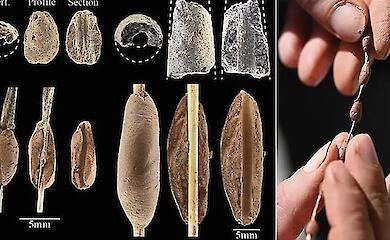
Archaeologists have found children's fingerprints in 15,000-year-old clay

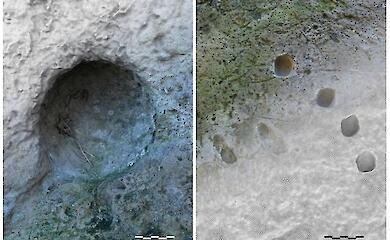
Traces of an "ancient machine gun" have been found in Pompeii
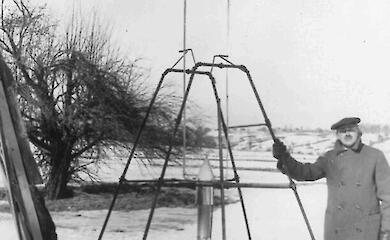
100 years ago, the first rocket was launched - this was the beginning of the space age

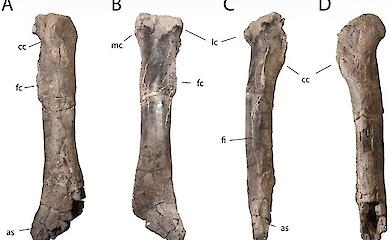
Scientists have found a huge bone from a possible ancestor of T. rex
Popular news
Orban announces "results" of Hungarian mission on Druzhba oil pipeline


Will maternity leave be shortened in Ukraine? Changes for workers with children


Zelensky said that Russia was preparing a new offensive and pointed out the direction of it


Kellogg named the ceasefire condition today and compared Putin to Nicholas II

News about war
Orban announces "results" of Hungarian mission on Druzhba oil pipeline
Kellogg named the ceasefire condition today and compared Putin to Nicholas II
Zelensky said that Russia was preparing a new offensive and pointed out the direction of it
Russia is destroying Ukraine twice as fast as at the start of the war - international report