


Scientists: human ancestors may have first appeared not in Africa, but in Asia


A new reconstruction of an ancient skull found in China could radically change the scientific understanding of human evolution.
Astudy published in the journal Science claims that the separation of the ancestors of Homo sapiens and other early hominids occurred 400,000 years earlier than previously thought - and possibly not in Africa, but in East Asia.
The centre of the study was a skull called Yunxian 2, discovered back in 1990 in China's Hubei province. For a long time it was considered to belong to the species Homo erectus. However, modern methods of 3D-modelling, CT-scanning and structural analysis allowed scientists to virtually recreate its shape and compare it with more than 100 other samples. The findings were unexpected.
The new reconstruction revealed the skull had contradictory features: on the one hand, a protruding face characteristic of Homo erectus; on the other, a brain volume and structure closer to Homo longi (also known as "Dragon Man") and even Homo sapiens.
"This changes the way we think about human evolution. It looks like there were already different branches of our ancestorsa million years ago," commented one of the study's authors, anthropologist Chris Stringer from London's Natural History Museum.
If the hypothesis is confirmed, it would challenge the established model that all modern humans originated from Africa. One of the independent experts, Professor Michael Petraglia of the Australian Centre for the Study of Human Evolution, said:
"This could be a turning point - Asia is beginning to play a key role in understanding the origins of Homo."
However, other experts are cautious about the findings. Archaeologist Andy Herris of La Trobe University noted that the external morphological features of the skulls do not always match the genetic data, and this is not enough to revise the entire evolutionary scheme.
Homo longi, or "Dragon Man", was not recognised as a new species until 2021, and the same Chris Stringer was involved in its description. The new Yunxian 2 skull, scientists say, could help clarify the so-called "confusion in the middle " - the period from 1 million to 300,000 years ago, where archaeological evidence does not yet provide a unified evolutionary picture.
"Fossils like Yunxian 2 show how much we still don't know about our own origins," Stringer emphasised.
Although the study is based on modern technology and high-quality sampling, many experts agree on one thing: the outcome will be hotly debated and likely contested. Genetic analyses of such findings are not yet possible, and without them it is difficult to confirm the evolutionary lineage with certainty.
An independent researcher, interested in archaeology and sacred geography. He researches them and writes about them.
Related news
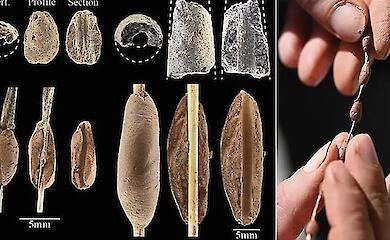
Archaeologists have found children's fingerprints in 15,000-year-old clay

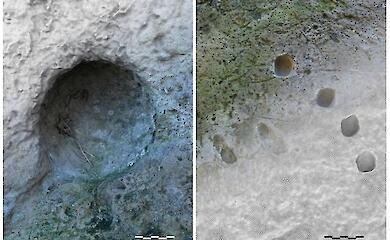
Traces of an "ancient machine gun" have been found in Pompeii
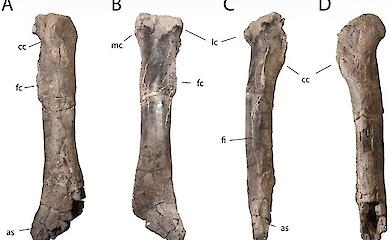
Scientists have found a huge bone from a possible ancestor of T. rex
Popular news

Orban announces "results" of Hungarian mission on Druzhba oil pipeline


Will maternity leave be shortened in Ukraine? Changes for workers with children


Zelensky said that Russia was preparing a new offensive and pointed out the direction of it


Kellogg named the ceasefire condition today and compared Putin to Nicholas II

News about war
Orban announces "results" of Hungarian mission on Druzhba oil pipeline
Kellogg named the ceasefire condition today and compared Putin to Nicholas II
Zelensky said that Russia was preparing a new offensive and pointed out the direction of it

Russia is destroying Ukraine twice as fast as at the start of the war - international report