


Scientists have proven the link between childhood stress and chronic diseases in the future
- Home
- Life
- Healthy lifestyle
- Scientists have proven the link between childhood stress and chronic diseases in the future


Researchers at Duke University have presented compelling evidence that stress experienced during childhood has a lasting impact on health.
The results were published in the journal Proceedings of the National Academy of Sciences.
The study found that children who experience high levels of stress between the ages of 9 and 11 are more likely to experience cardiovascular and metabolic problems in adulthood. The scientists focused on allostatic load - the cumulative "wear and tear" on the body due to chronic stress.
"We've known for a long time, since the 1980s, that childhood trauma affects not only the psyche but also the physiology. Stress literally gets under the skin and affects how the body works," said study co-author Professor Hermann Pontzer, an expert in evolutionary anthropology and global health at Duke University.
The research team, led by PhD student Elena Hinz, used objective biomarkers such as levels of C-reactive protein (a marker of inflammation), antibodies to the Epstein-Barr virus, body mass index and blood pressure. These data allowed us to assess how stress in childhood affects a person's physical well-being years later.
Usually, in this kind of work, scientists rely on adults' memories of the hardships they've experienced. In contrast, Hinz's team used data from the Great Smoky Mountains Study, a large-scale longitudinal study begun in 1992 that routinely collects both psychological and physiological measures of children.
The study pays particular attention to the role of poverty as a major source of chronic stress in children.
"Education, job training, stability and access to food all reduce a child's stress. It's not just emotional. Lack of resources affects physiology, from blood pressure to immunity," Pontzer emphasises.
Hinz adds that the body triggers a "fight or flight" response when stressed - heart rate increases and blood pressure rises. If these reactions become chronic, they lead to wear and tear on the body.
Elena Rasenko writes about science, healthy living and psychology news, and shares her work-life balance tips and tricks.
Related news
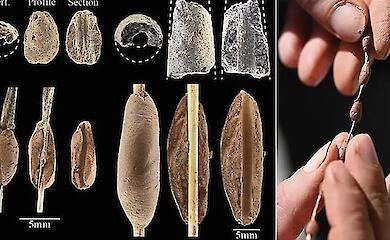
Archaeologists have found children's fingerprints in 15,000-year-old clay


'If you have kidney stones, you need to drink more water'. Scientists have tested a well-known myth




Scientists have discovered how a father's health affects his child before conception
Popular news
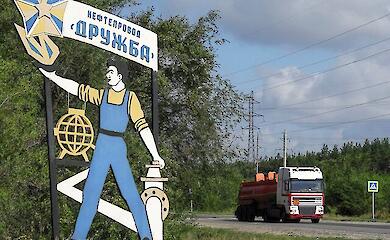
Orban announces "results" of Hungarian mission on Druzhba oil pipeline


Will maternity leave be shortened in Ukraine? Changes for workers with children


Zelensky said that Russia was preparing a new offensive and pointed out the direction of it

Kellogg named the ceasefire condition today and compared Putin to Nicholas II

News about war
Orban announces "results" of Hungarian mission on Druzhba oil pipeline
Kellogg named the ceasefire condition today and compared Putin to Nicholas II
Zelensky said that Russia was preparing a new offensive and pointed out the direction of it

Russia is destroying Ukraine twice as fast as at the start of the war - international report