
Scientists have found Europe's 'missing' dinosaurs


Scientists have solved the mystery of Europe's "missing" dinosaurs: they were around all along
Palaeontologists have revisited one of the long-standing misconceptions about dinosaur history. Horned dinosaurs - ceratopsians, thought to be almost absent from Europe, actually lived on the continent millions of years ago. They were simply mistaken for other animals for decades.
This conclusion was reached by an international team of scientists who published a study in the journal Nature. Using computed tomography and 3D modelling, the researchers re-examined the skull of the dinosaur Ajkaceratops kozmai, found in Hungary.
Ajkaceratops was previously thought to be a member of iguanodonts - herbivorous dinosaurs with a similar skull structure. However, the new study revealed key features of ceratopsians: a hooked beak and a characteristically curved palate typical of horned dinosaurs of Asia and North America.
This discovery allowed scientists to take a fresh look at other European finds. So, one of the fossilised skulls from Romania, which for many years attributed to different species, was another representative of ceratopsians. It was singled out as a separate genus and named Ferenceratops.
During the Late Cretaceous, Europe was a chain of islands connected to Asia and North America by land bridges. This explains how horned dinosaurs could have travelled to the continent, but because of fragmentary finds, their presence has long remained in doubt.
The authors of the study believe there could be many more such "hidden" dinosaurs. Many fossils found in Europe back in the XX century, need to be re-analysed using modern technology.
Scientists are calling for a major revision of European museum collections. They say the new discovery changes ideas about the evolution of herbivorous dinosaurs and shows that Europe's biodiversity in the Cretaceous was much richer than previously thought.
"Our results point to the need for a fundamental revision of the composition of Late Cretaceous dinosaurs in Europe," the authors of the paper said.
Mykola Potyka has a wide range of knowledge and skills in several fields. Mykola writes interestingly about things that interest him.
Related news
Almost 500 blue artefacts have linked Iron Age Iran with ancient Egypt


A Chinese inscription has debunked the legend surrounding the Boston Tea Party relic
How new technologies have debunked old myths about African history
Scientists have investigated how a seashell bead travelled 8,500 years ago
Popular news
Ukrainian security services have been recognised as among the best intelligence services in Europe – L'Express


Irina Levchenko, the abducted Ukrainian journalist, has been transferred to the Donetsk remand centre: what is known

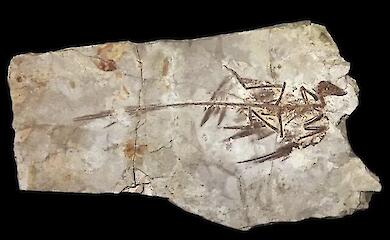
Scientists have put forward an explanation as to why there were no tiny dinosaurs


How to cook sweetcorn properly so that it’s juicy and sweet: the best method revealed
News about war

The UN has reported a sharp rise in the number of Ukrainian civilians killed as a result of the war


3 July has been declared a day of mourning in Kyiv. The number of dead and injured is rising