


Scientists have discovered that dog diversity predates modern breeds by a long time


From country mongrels to Toy Poodles and Mastiffs, dogs come in an astonishing variety of shapes, colours and sizes.
Today, some 700 million dogs live alongside humans, and the histories of our species are closely intertwined. A new analysis of ancient remains and DNA shows that this diversity and close alliance with humans originated much earlier than commonly thought. This is reported by The Conversation.
The two new papers, published in the journal Science, complement each other. One team, led by Alloene Even from the University of Montpellier, studied ancient skulls of dogs and wolves. The other, led by Shao-Jie Zhang of the Kunming Institute of Zoology, analysed DNA from ancient dogs from eastern Eurasia.
Even's group examined 643 dog and wolf skulls from the last 50,000 years to trace the origins of modern diversity. The analysis showed that the characteristic "dog" skull shape first appears about 11,000 years ago, already in the Holocene, after the last ice age. At the same time, already in this early period in dogs there is a noticeable morphological diversity.
The scientists re-described the shape of all 17 known skulls of dogs or wolves from the late Pleistocene (129,000-11,700 years ago), including those up to 50,000 years old. All were found to be essentially wolf-like in structure, even those previously attributed to early dogs. This suggests that the evolutionary divergence of wolves and dogs occurred in the Pleistocene, but that clear changes in skull shape in dogs did not begin until closer to the Holocene. At the same time, some Early Holocene dogs still retained wolf-like features.
The researchers concluded that ancient dogs were far more diverse than previously thought, and it was this early variation that laid the foundation for the extreme range of sizes and shapes we see in domestic dogs today.
In parallel, Zhang's team used 73 ancient dog genomes up to 10,000 years old to trace how humans and dogs travelled across eastern Eurasia. Previously, geneticists had identified four major ancient dog lineages that emerged about 20,000 years ago: eastern (East Asian and Arctic) and western (Europe and the Middle East).
The new analysis showed that the origins of dogs in different regions varied over time and often coincided with the movements of specific human groups - hunter-gatherers, farmers, herders. This suggests that when people developed new territories, they often took their dogs with them, carrying their genetic heritage with them, rather than simply breeding new animals on the spot.
Researchers have also noted inconsistencies between the evolution of humans and dogs in some regions. For example, eastern hunter-gatherers from Veretia and the Botai settlement, who were genetically closer to West Eurasian people, kept mostly eastern (Arctic) dogs, rather than "western" dogs like other cultures in the region. This may point to the role of dogs as an important object of exchange between communities or to not yet fully understood features of the development of dog populations.
The authors call ancient dogs "biocultural packets": not only technologies and traditions moved with humans, but also their constant four-legged companions. In this way, the genetic history of dogs becomes a living archive of ancient migrations, trade routes and human cultural contacts.
Both papers show that the astonishing diversity of modern dogs is not the product of selection alone over the past centuries. The genetic and morphological prerequisites for this diversity were formed over thousands of years, under the influence of natural selection, human choice and different habitats, long before the advent of systematic breeding.
An independent researcher, interested in archaeology and sacred geography. He researches them and writes about them.
Related news
More than 50,000 seals killed by bird flu - scientists sound the alarm

Archaeologists have found children's fingerprints in 15,000-year-old clay

Traces of an "ancient machine gun" have been found in Pompeii
Popular news
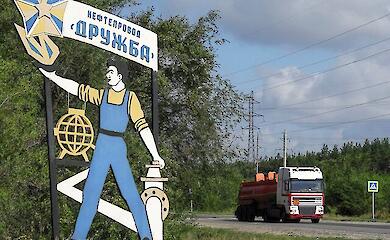
Orban announces "results" of Hungarian mission on Druzhba oil pipeline


Will maternity leave be shortened in Ukraine? Changes for workers with children


Zelensky said that Russia was preparing a new offensive and pointed out the direction of it


Kellogg named the ceasefire condition today and compared Putin to Nicholas II

News about war
Orban announces "results" of Hungarian mission on Druzhba oil pipeline
Kellogg named the ceasefire condition today and compared Putin to Nicholas II
Zelensky said that Russia was preparing a new offensive and pointed out the direction of it
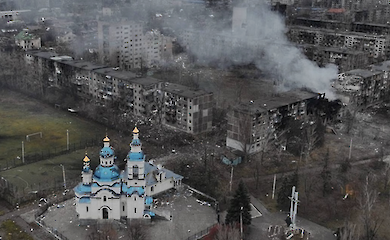
Russia is destroying Ukraine twice as fast as at the start of the war - international report