
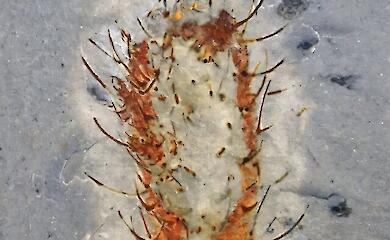

Scientists have discovered that corals "sleep" like humans


Corals sleep for a third of the day - this helps them survive alongside microbes
Corals, despite lacking a nervous system and brain, are able to "sleep" - while the symbiotic microorganisms living inside them remain active.
This is the conclusion reached by scientists from the Institute of Evolutionary Biology (IBE), a joint centre of the Spanish National Research Council (CSIC) and the University of Pompeu Fabra. The results of the study are published in the journal Cell Host & Microbe.
Until now, sleep was thought to be characteristic mainly of animals with nervous systems. However, a new study has shown that corals have a distinct diurnal rhythm of rest and activity necessary to maintain their symbiotic relationship with microbes.
The work was carried out directly on a coral reef off the coast of the island of Curaçao in the Caribbean Sea. The scientists studied the brain coral Pseudodiploria strigosa and its symbiont, the microalga Breviolum, which lives inside the coral's cells and supplies it with nutrients during photosynthesis.
For three days, the researchers dived every six hours and analysed the gene activity of both the coral and its symbionts. The results showed that the coral goes into a resting state at night and "sleeps" for about a third of the day, which is comparable to the duration of sleep in humans. At the same time, its microbiome remains largely active.
According to the authors, sleep is necessary for corals to recover from daytime stress. During daylight hours, symbionts actively photosynthesise, providing the coral with organic matter, but at the same time they release reactive oxygen species that can damage tissues and DNA of the host. Nighttime "sleep" allows corals to trigger mechanisms to repair and restore genetic material.
"At night, corals repair DNA damage caused by the activities of their symbionts during the day," explains study leader Javier del Campo.
At the same time, microalgae stop photosynthesis, but continue to perform other cellular functions and do not need complete rest.
The authors note that without this circadian rhythm, the symbiosis between coral and microbes could become toxic. Sleep allows balance to be maintained in this ancient mutually beneficial relationship, which scientists believe may have formed billions of years ago.
The study also has practical implications. Understanding the biological rhythms of corals could help reef restoration programmes and better assess how microbial communities influence coral resilience to climate change.
According to the researchers, the work confirms that sleep is an ancient evolutionary mechanism that predates the nervous system and plays a key role not only in the individual survival of organisms, but also in maintaining complex interspecific relationships.
Maria Grynevych, project manager, journalist, co-author of Guidebook Sacred Mountains of the Dnieper Region, Lecture Course: Cult Topography of the Middle Dnieper Region.
Related news

These microbes survive boiling water and acid - and could help save the Earth

100 years ago, the first rocket was launched - this was the beginning of the space age

Popular news

Orban announces "results" of Hungarian mission on Druzhba oil pipeline

Will maternity leave be shortened in Ukraine? Changes for workers with children


Zelensky said that Russia was preparing a new offensive and pointed out the direction of it


Kellogg named the ceasefire condition today and compared Putin to Nicholas II

News about war
Orban announces "results" of Hungarian mission on Druzhba oil pipeline
Kellogg named the ceasefire condition today and compared Putin to Nicholas II
Zelensky said that Russia was preparing a new offensive and pointed out the direction of it

Russia is destroying Ukraine twice as fast as at the start of the war - international report