


Scientists have confirmed: exercise actually speeds up metabolism


Physical activity actually helps you burn more calories - and your body doesn't save energy for other functions.
This conclusion was reached by scientists from Virginia Tech University (Virginia Tech) together with colleagues from the Universities of Aberdeen (UK) and Shenzhen (China).
The results are published in the journal Proceedings of the National Academy of Sciences.
The researchers studied how exercise affects the body's overall "energy budget" - that is, how the body allocates and expends calories on various functions, including breathing, blood circulation and body temperature.
Until now, scientists have assumed two possibilities: either the body redistributes a fixed amount of energy, "taking it away" from other functions in favour of movement, or it increases its total energy expenditure through additional physical activity.
"Our findings show that physical activity does lead to an increase in daily calorie expenditure, regardless of body build," explains Professor Kevin Davie, lead author of the study. - And we found no evidence that the body compensates for this activity by saving energy for other processes."
The study involved 75 people aged between 19 and 63, ranging from sedentary people to ultra-marathon runners. Each of them wore a special sensor on their waistband that recorded movements in several directions.
To accurately measure daily energy expenditure, participants drank hydrogen and oxygen isotopes and then had their urine analysed over a two-week period. The difference in excretion of these isotopes allowed them to determine the amount of carbon dioxide excreted - and therefore the total number of calories burned.
The results of the study showed that despite the increase in physical activity, the basic functions of the body - breathing, thermoregulation, heartbeat - continued to consume the usual amount of energy. The body didn't try to "economise" on these processes to compensate for the movement.
"We specifically worked with participants who were adequately nourished," clarifies Kristen Howard, co-author of the study. - Perhaps the compensation that has been talked about before is only seen under conditions of energy deficiency, such as rigid diets."
The study also confirmed an obvious but important trend: the more active a person is, the less time they spend sedentary.
Conclusion: movement does help to burn calories, and the body does not "nullify" this effect at the expense of other functions.
Maria Grynevych, project manager, journalist, co-author of Guidebook Sacred Mountains of the Dnieper Region, Lecture Course: Cult Topography of the Middle Dnieper Region.
Related news




Popular news
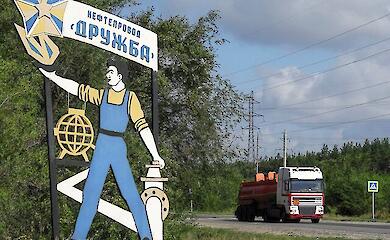
Orban announces "results" of Hungarian mission on Druzhba oil pipeline


Will maternity leave be shortened in Ukraine? Changes for workers with children

Zelensky said that Russia was preparing a new offensive and pointed out the direction of it


Kellogg named the ceasefire condition today and compared Putin to Nicholas II

News about war
Orban announces "results" of Hungarian mission on Druzhba oil pipeline
Kellogg named the ceasefire condition today and compared Putin to Nicholas II
Zelensky said that Russia was preparing a new offensive and pointed out the direction of it
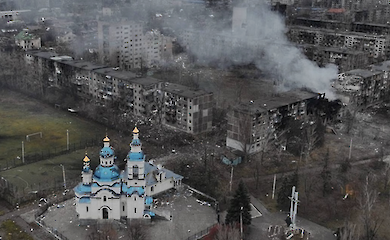
Russia is destroying Ukraine twice as fast as at the start of the war - international report