


Scientists believe Mars may have been habitable: details


This discovery indicates that the Red Planet may have been habitable in the past.
New research led by Curtin University has revealed the oldest direct evidence of hot water activity on Mars.
As part of the study, scientists analysed 4.45 billion-year-old zircon grains found in the famous Martian meteorite NWA7034, known as "Black Beauty". They found geochemical "fingerprints" of water-rich fluids.
Study co-author Dr Aaron Cavosi, from Curtin University's School of Earth and Planetary Sciences, said the discovery opens up new possibilities for understanding ancient Martian hydrothermal systems associated with magmatism, as well as the planet's past habitation.
'We used geochemistry at the nanoscale to uncover elemental evidence of hot water on Mars 4.45 billion years ago,' Dr Cavosi said. - Hydrothermal systems were essential for the development of life on Earth, and our findings suggest that Mars also had water - a key ingredient for habitable environments - at the earliest period of crustal formation.
Using nanoscopic imaging and spectroscopy, the team identified elements such as iron, aluminium, yttrium and sodium in this unique zircon. These elements were added during the formation of the zircon 4.45 billion years ago, indicating the presence of water during early Martian magmatic activity.
The results of the study are published in the journal Science Advances.
Dr Cavosi also noted that even though the crust of Mars has experienced massive meteorite impacts that caused significant surface changes, water was present during the early pre-Prenoachian period, until about 4.1 billion years ago.
A 2022 Curtin University study of the same zircon grain found that it had been 'shocked' by a meteorite, making it the first and only known 'shocked' zircon from Mars," Dr Cavosi added. "The new study takes us a step forward in our understanding of early Mars by revealing clear evidence of water-rich fluids during grain formation and providing geochemical markers of water in the oldest known Martian crust.
The lead author of the study is Dr Jack Gillespie of the University of Lausanne, who was a research associate at Curtin University's School of Earth and Planetary Sciences at the time of the study. Co-authors also include researchers from Curtin University's Centre for Space Science and Technology, the John de Leiter Centre and the University of Adelaide.
Extra: Jack Gillespie, Zircon trace element evidence for early hydrothermal activity on Mars, Science Advances (2024). DOI: 10.1126/sciadv.adq3694
Mykola Potyka has a wide range of knowledge and skills in several fields. Mykola writes interestingly about things that interest him.
Related news
Lost satellite 'brought back to life' after a month - scientists talk of a miracle

These microbes survive boiling water and acid - and could help save the Earth

Astronomers have discovered a mysterious source of signals in space
Popular news
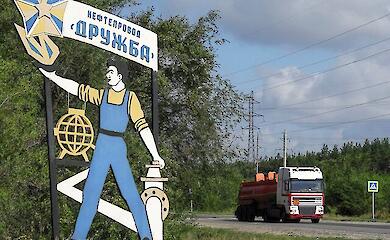
Orban announces "results" of Hungarian mission on Druzhba oil pipeline

Will maternity leave be shortened in Ukraine? Changes for workers with children


Zelensky said that Russia was preparing a new offensive and pointed out the direction of it


Kellogg named the ceasefire condition today and compared Putin to Nicholas II

News about war
Orban announces "results" of Hungarian mission on Druzhba oil pipeline
Kellogg named the ceasefire condition today and compared Putin to Nicholas II
Zelensky said that Russia was preparing a new offensive and pointed out the direction of it

Russia is destroying Ukraine twice as fast as at the start of the war - international report