
Russian Federation no longer claims the entire Donetsk region: Erdogan's details named

Turkish Foreign Minister Hakan Fidan has said that there has been a noticeable shift in Russia's position on the war against Ukraine in recent months.
According to him, it is not about the final agreement, but about the formation of a framework in which it became possible to discuss a ceasefire and future security guarantees. This is reported by tgrthaber.com.
What exactly Fidan said
According to the Turkish foreign minister, during the third round of contacts in Istanbul, the sides exchanged "substantive" positions for the first time, which were then taken to a broader political level - up to and including discussion at the meeting between US President Donald Trump and Russian leader Vladimir Putin in Alaska. Fidan characterised this moment as "the beginning of the end" - not of the war as such, but of the uncertainty surrounding the parameters of a possible settlement.
What Turkey sees as a change in Moscow's position
Fidan argues that Russia is no longer insisting on full control of all territories in the four occupied regions. Instead, he says, it is discussing:
fixing the front line in the Zaporizhzhya region;
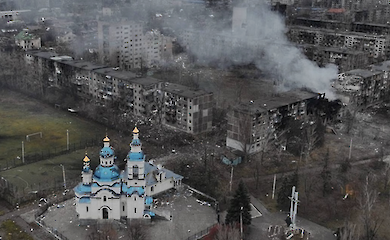
securing 25-30 per cent of the territory of Donetsk region for the Russian Federation;
formalising these conditions through an international mechanism of security guarantees.
Why it is important
According to Fidan, this configuration could become the basis for a future agreement: the presence of external guarantees reduces the risks of a ceasefire breakdown and creates space for further political dialogue. At the same time, the minister emphasises that for Ukraine this entails serious challenges - from possible territorial concessions to the need to build a long-term security system while maintaining pressure from Russia.
Turkey has consistently positioned itself as a platform for dialogue and a channel of communication between the parties. According to Ankara's version, it was the Istanbul contacts that made it possible to "digitise" the disagreements and form a set of options that are now being discussed at the level of leaders and allies. However, Fidan makes a special point: we are talking about the dynamics of positions, not about a deal reached - political obstacles and differences remain.
If the shifts announced by Turkey are confirmed in practical terms, the next stage could be a discussion of the parameters of the ceasefire, verification of compliance and the composition of international guarantors. But the key will remain Kyiv's consent and the ability of external actors to ensure the reliability of any agreements.

Journalist and editor of informational and analytical programs.
Related news

More than 50,000 seals killed by bird flu - scientists sound the alarm


Traces of an "ancient machine gun" have been found in Pompeii


Scientists have discovered a bright pink insect that changes colour
Orban announces "results" of Hungarian mission on Druzhba oil pipeline

Popular news
Orban announces "results" of Hungarian mission on Druzhba oil pipeline

Will maternity leave be shortened in Ukraine? Changes for workers with children

Zelensky said that Russia was preparing a new offensive and pointed out the direction of it


Kellogg named the ceasefire condition today and compared Putin to Nicholas II

News about war
Orban announces "results" of Hungarian mission on Druzhba oil pipeline
Kellogg named the ceasefire condition today and compared Putin to Nicholas II
Zelensky said that Russia was preparing a new offensive and pointed out the direction of it
Russia is destroying Ukraine twice as fast as at the start of the war - international report