


Previously unknown "frog-like" insects discovered in Uganda


Seven species of unusual insects new to science have been discovered in the tropical forests of Uganda, which look like miniature frogs.
The discovery was made by Alvin Helden, an entomologist from Anglia Ruskin University (Cambridge, UK). The results of the work were published in the journal Zootaxa.
The new species belong to the genus Batracomorphus - its name comes from the Greek for "frog-like". These leafhoppers, or cicadas, are usually green in colour, with large eyes and long hind legs, which they clasp to their bodies like frogs and use to jump.
Up to this point, 375 species of Batracomorphus were known worldwide. The seven new species were discovered using light traps in the rainforest of Kibale National Park (Uganda), more than 1,500 metres above sea level. These are the first new species of the genus Batracomorphus described for Africa since 1981.
One of the most difficult tasks for scientists was to confirm that the found insects really belong to previously unknown species. Representatives of this genus are almost indistinguishable in appearance, and a reliable way to separate one species from another is to study the structure of the genitalia.
In leafhoppers, the principle of "lock and key" operates: the sexual organs of the male (key) have a unique shape, and fit only to the sexual organs of the female of the same species (lock). These complex structures, made up of the same hard material as the external skeleton, virtually eliminate hybridisation - successful mating is only possible between individuals of the same species.
According to Alvin Helden, leafminers are "beautiful and touching" insects. Although some species can be pests of crops such as maize and rice, overall this group is highly underestimated. Leafhoppers provide an important food source for birds and other insects, and their presence is considered a sign of a healthy ecosystem.
The scientist notes that finding the new species required painstaking work in rainforest conditions, heat and high humidity, but the discovery of organisms previously unknown to science is paying off.
Helden named six of the new species in Greek, after characteristic features or the place where they were found. One species, Batracomorphus ruthae, has been given a particularly personal meaning for the researcher: it is named in honour of his mother, Ruth, who passed away in 2022.
Ruth was a scientist and worked in a hospital lab. It was she who bought her son his first microscope - the same one he still has today - and encouraged his interest in science from a very early age. Naming the new species in her honour was "the most fitting tribute" for him, Helden said.
Mykola Potyka has a wide range of knowledge and skills in several fields. Mykola writes interestingly about things that interest him.
Related news
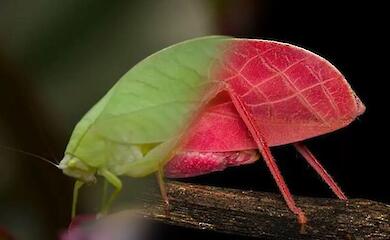
Scientists have discovered a bright pink insect that changes colour

Popular news
Orban announces "results" of Hungarian mission on Druzhba oil pipeline


Will maternity leave be shortened in Ukraine? Changes for workers with children


Zelensky said that Russia was preparing a new offensive and pointed out the direction of it


Kellogg named the ceasefire condition today and compared Putin to Nicholas II

News about war
Orban announces "results" of Hungarian mission on Druzhba oil pipeline
Kellogg named the ceasefire condition today and compared Putin to Nicholas II
Zelensky said that Russia was preparing a new offensive and pointed out the direction of it

Russia is destroying Ukraine twice as fast as at the start of the war - international report