


Captured Russians refuse to return home to Russian Federation - The Economist

Some Russian prisoners refuse to be exchanged, or ask for it to be delayed until the end of their contract so they don't have to return to the war
After the captivity, the occupants have significantly changed their position on the invasion of Ukraine by Putin's troops.
This is stated in a piece by The Economist.
The Ukrainian side treats Russian prisoners better than Russia treats Ukrainians. In Ukrainian colonies, Russian prisoners are not forced to work and their wishes are listened to. At the same time, only some of them admit that Russia's war against Ukraine is useless.
The publication explained that Ukraine keeps the captured Russians in special colonies. They get there after passing through a number of detention centres and communicating with law enforcers.
Those Russians who are suspected of committing crimes or violating the rules of war are separated. The rest, after some time in the colony, can return home. At the same time from the moment of captivity to the moment of return passes "several months", stated in the material.
Some prisoners ask the Ukrainian authorities to postpone their exchange until the end of their military contracts, so as not to be forced to fight again. Some ask not to return them at all, but then they will be forced to remain in detention until the end of the war, unless they volunteer to fight in anti-Putin Russian units that Ukraine supports," the publication writes.
One of the captured occupation convicts, Andrei, got to the front straight from a colony near Moscow. Recruiters offered him a good salary and cancellation of his criminal record in exchange for six months of service. Two weeks after his arrival at the front, he stepped on a mine and lost his leg. He was rescued by the Ukrainian military. He was taken prisoner.
If I had known the consequences of my decision (to fight against Ukraine - ed), I would not have done it," he said.
The Economist also cites certain details of the Russians' stay in Ukrainian colonies.
For example, the prisoners have the right to call their relatives and receive parcels. It is pointed out that they do unskilled work: gluing packages or making garden arbours. There are very few officers among the prisoners and even when they are there, they are not forced to work.
It is noted that it is impossible to give an exact number of prisoners. Achille Despres of the International Committee of the Red Cross said he had personally visited 1,500 prisoners from both sides. However, he noted that there are still "thousands of them to whom there is no access". However, Despres refused to divulge whether both sides had granted full access to the captives.
Earlier, Socialportal reported that according to the Justice Ministry, the Russian prisoners were held in the conditions in which officers of the Ukrainian Armed Forces lived, were fed and served.


Over 10 years in journalism. Media analyst from Volyn.
Related news

Kellogg named the ceasefire condition today and compared Putin to Nicholas II

Britain says under what circumstances Putin will start a war in Europe

Zelensky said that Russia was preparing a new offensive and pointed out the direction of it
Popular news
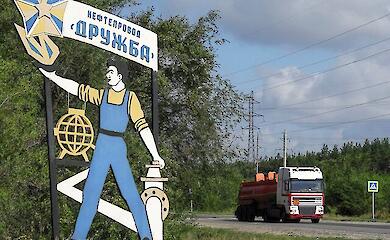
Orban announces "results" of Hungarian mission on Druzhba oil pipeline


Will maternity leave be shortened in Ukraine? Changes for workers with children

Zelensky said that Russia was preparing a new offensive and pointed out the direction of it
Kellogg named the ceasefire condition today and compared Putin to Nicholas II
News about war
Orban announces "results" of Hungarian mission on Druzhba oil pipeline
Kellogg named the ceasefire condition today and compared Putin to Nicholas II
Zelensky said that Russia was preparing a new offensive and pointed out the direction of it
Russia is destroying Ukraine twice as fast as at the start of the war - international report