

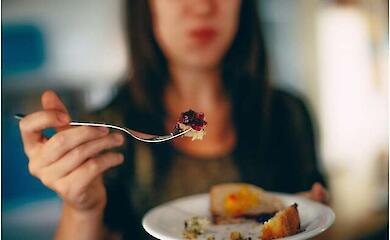
Plant-based products can also cause food poisoning


The popular belief that plant foods are safer than animal foods has proven to be a myth.
According to food safety researcher Jenny Schelin from Lund University, Sweden, plant-based foods are subject to the same risks of pathogen contamination as meat, fish, milk or eggs, writes Medicalxpress.
"There is a naive belief that plant foods are by definition safer. Alas, this is not the case. We simply know less about the threats posed by new plant foods," says Shelin.
The scientist emphasises that a shift to a predominantly plant-based diet is inevitable - for the sake of the environment, sustainable agriculture and health. Consuming less meat will help reduce our carbon footprint and reduce pressure on land and water resources. In addition, vegetables and legumes are good for the body and make the food system more resilient in the event of crises.
However, along with this comes a new challenge - the underestimation of microbiological risks. In recent years, severe cases of food poisoning caused by contamination of plant products with classical pathogens such as listeriosis, salmonella and clostridia (Clostridium botulinum) have been reported worldwide.
"We have studied animal products well and know how to handle them to avoid infections. But similar knowledge about plant raw materials and how they are processed is still insufficient, so the risks are often underestimated," explains the researcher.
Even common legumes can be dangerous if not cooked properly. For example, undercooked beans or lentils can cause poisoning due to the lectins they contain.
In addition, modern plant foods often undergo multiple steps of processing. The production of plant-based meat analogues involves complex steps: plant proteins are first made into a powder, then dough is made, a structure is formed, flavourings and breading are added. "Each processing step is an additional point of risk," says Schelin.
The scientist notes that unlike whole foods like boiled peas, plant-based convenience foods require strict control at every stage of production. Failure to do so increases the likelihood of bacterial ingestion, especially if fibre and raw material residues are left in the equipment where spores can develop.
"Plant fibres are more difficult to clean. They get stuck in the production equipment and if it is not cleaned completely, bacteria from the previous batch can get into the next batch," warns Schelin.
She emphasises that along with the introduction of new types of food, knowledge about sanitation and safety needs to be updated - both among professionals and consumers. People need to understand how to properly store, cook and process food at home.
"We live in comfortable environments where a fridge, clean water and cooked food seem to be taken for granted. But this is what makes us vulnerable. It takes as much knowledge as technology to eat safely," the researcher concludes.
Maria Grynevych, project manager, journalist, co-author of Guidebook Sacred Mountains of the Dnieper Region, Lecture Course: Cult Topography of the Middle Dnieper Region.
Related news


These microbes survive boiling water and acid - and could help save the Earth


100 years ago, the first rocket was launched - this was the beginning of the space age

Popular news
Orban announces "results" of Hungarian mission on Druzhba oil pipeline

Will maternity leave be shortened in Ukraine? Changes for workers with children


Zelensky said that Russia was preparing a new offensive and pointed out the direction of it


Kellogg named the ceasefire condition today and compared Putin to Nicholas II

News about war
Orban announces "results" of Hungarian mission on Druzhba oil pipeline
Kellogg named the ceasefire condition today and compared Putin to Nicholas II
Zelensky said that Russia was preparing a new offensive and pointed out the direction of it

Russia is destroying Ukraine twice as fast as at the start of the war - international report