


Palaeontologists have discovered new species of ancient birds of prey from the Cretaceous period


A team of scientists has described three new species of Enantiornis birds-the most diverse group of feathered birds of the Cretaceous period.
The remains of these ancient raptors were discovered in the Hell Creek Formation in what is now the state of Montana, USA. This discovery provides a better understanding of the evolution of birds on the eve of mass extinction.
The new findings at Hell Creek
66-68 million years ago, ancient birds of prey lived side by side with Tyrannosaurus rex and Triceratops on the island continent of Laramidia, where western North America is now located. The Hell Creek Formation is a key site for studying Late Cretaceous ecosystems, where remains of fish, amphibians, mammals and a variety of dinosaurs have previously been found.
In the journal PLOS ONE, palaeontologists have provided descriptions of three new species of extinct birds. Two of them belong to the family Avisauridae, part of the broader Enantiornis group of birds. At least one of the birds found was comparable in size to modern hawks and had a predatory lifestyle.
Previously, members of the family Avisauridae were known mainly from individual hind limb elements found in North and South America. Most information about Enantiornis was based on fossils from China from the earlier Cretaceous period, so Late Cretaceous finds are particularly valuable.
Research Methodology
A team led by Alex Clark at the University of Chicago analysed the fossil ceca-the leg bones of birds between the tibia and toes. These bones were found separately, without other parts of the skeleton. By comparing them to the bones of modern birds, the scientists found that in the extinct species, the muscles and ankle joint worked like a lever, allowing the birds to grab and carry prey like modern owls and hawks.
Paleontologists have described two species new to science: Avisaurus darwini (in honour of Charles Darwin) and Magnusavis ekalakaensis (in honour of the town of Ekalaka, Montana, where the fossil was found). The third species has yet to be precisely identified. This discovery greatly expands the understanding of the diversity of birds in the Late Cretaceous and provides an opportunity to study their evolution before mass extinction.
Maria Grynevych, project manager, journalist, co-author of Guidebook Sacred Mountains of the Dnieper Region, Lecture Course: Cult Topography of the Middle Dnieper Region.
Related news

More than 50,000 seals killed by bird flu - scientists sound the alarm

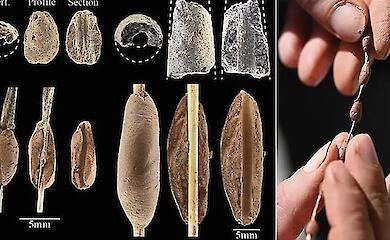
Archaeologists have found children's fingerprints in 15,000-year-old clay

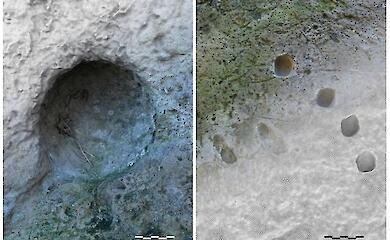
Traces of an "ancient machine gun" have been found in Pompeii

Popular news

Orban announces "results" of Hungarian mission on Druzhba oil pipeline


Will maternity leave be shortened in Ukraine? Changes for workers with children


Zelensky said that Russia was preparing a new offensive and pointed out the direction of it


Kellogg named the ceasefire condition today and compared Putin to Nicholas II

News about war
Orban announces "results" of Hungarian mission on Druzhba oil pipeline
Kellogg named the ceasefire condition today and compared Putin to Nicholas II
Zelensky said that Russia was preparing a new offensive and pointed out the direction of it

Russia is destroying Ukraine twice as fast as at the start of the war - international report